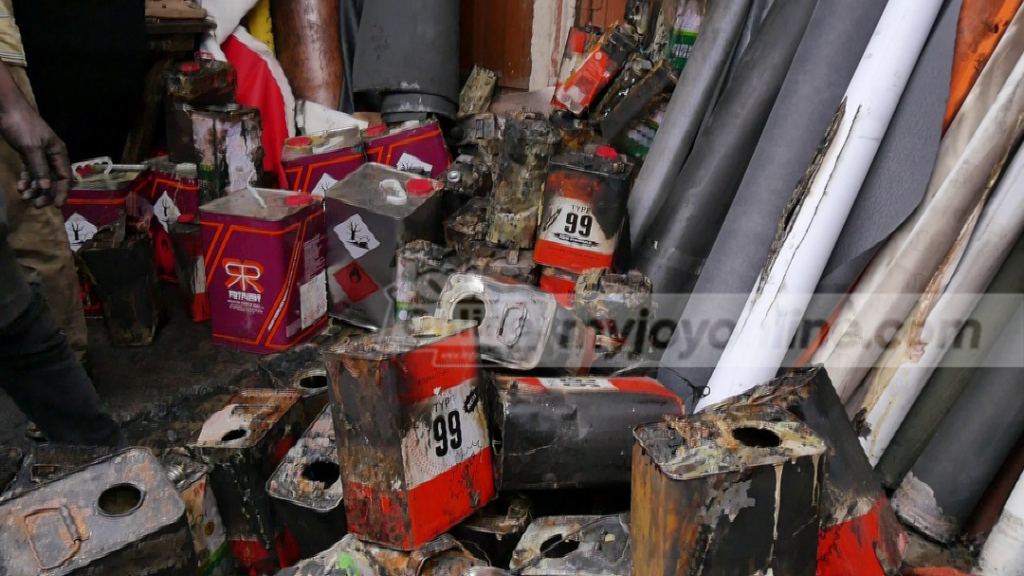
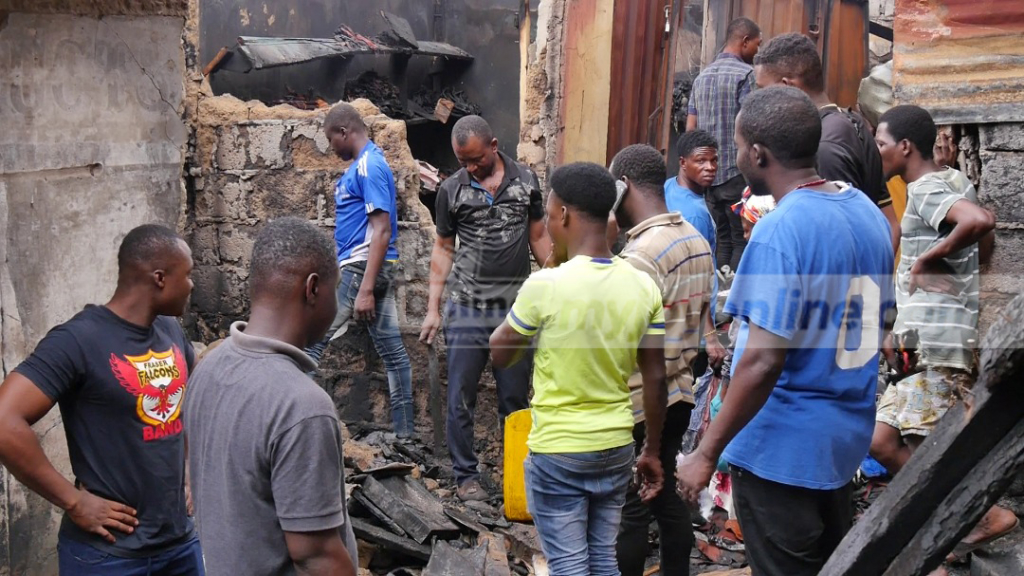
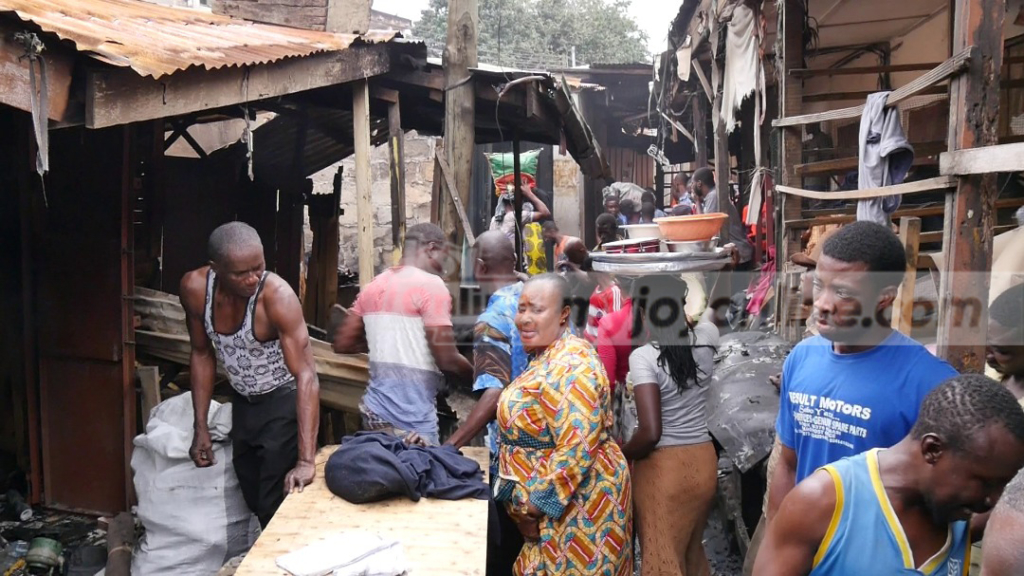
Fire has swept through 20 shops at the leather and footwear section of the Kumasi Central Market, Monday morning, destroying goods worth thousands of cedis.
Items like leather materials, bags, shoes and slippers were burnt in the blaze.
The cause of the fire is yet to be ascertained, but the traders suspect a trigger from the poor management of their production equipment which emits fire.
Some affected victims recounted their losses when they spoke to AdomNews correspondent, Nana Awuku Denkyembour.
“I had stocked my shop with leather. Everything has been destroyed. I had no access to salvage any of my items,” said one woman.
Another said “I have restocked my shop with leathers worth thousands of cedis. I bought some with my own money and others on credit. I had no call concerning the fire, upon reaching this morning people started consoling me”.
Leadership of the Nkokoadwasuo Footwear Manufacturers Association has called for the government’s financial intervention to revamp their operations.
Chairman of the Association, Ebenezer Amaniampong says without support, most of their members cannot be in business again.
The Ashanti Regional Fire Command is investigating the cause of the fire and possible recommendations.
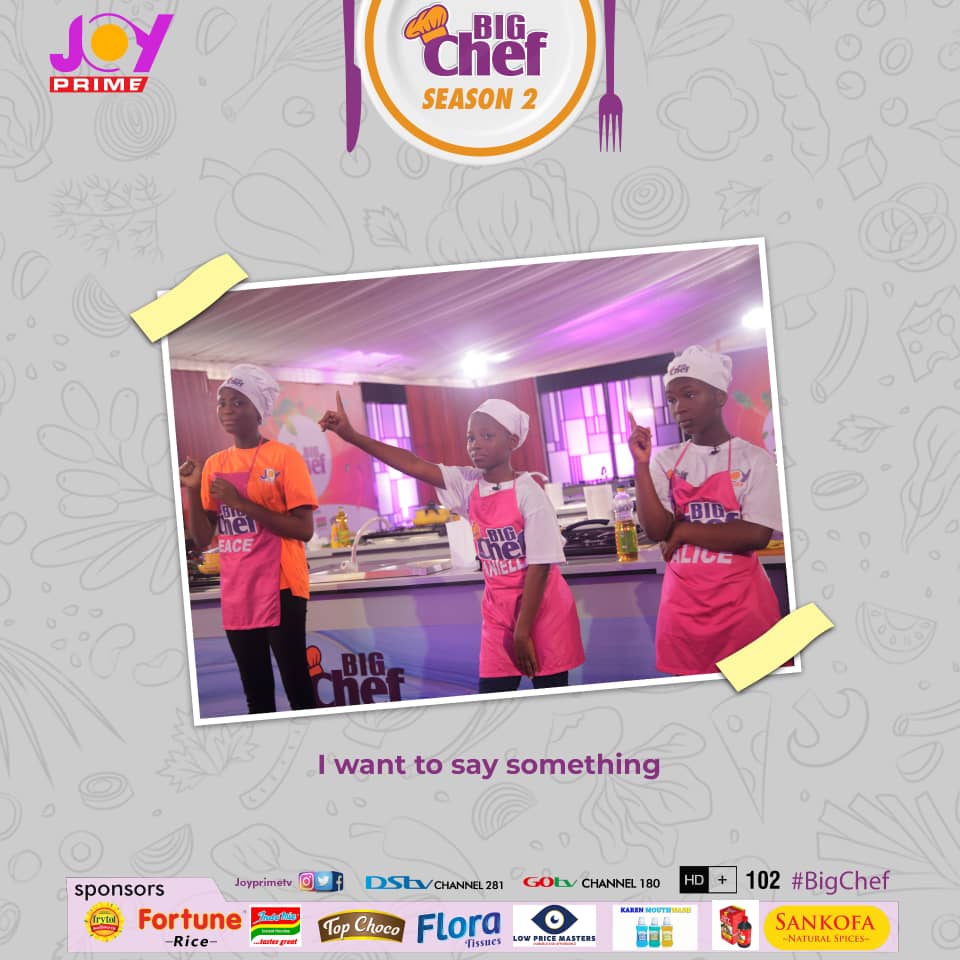
Three contestants of Big Chef Season 2 who were up for eviction have been spared.
At the end of the sandwich challenge, Daniella, Peace, and Alice ended up at the bottom.
They either did not really impress the judges with their meal, plating, or garnish.Peace, Daniella and Alice were up for eviction after the sandwich challenge
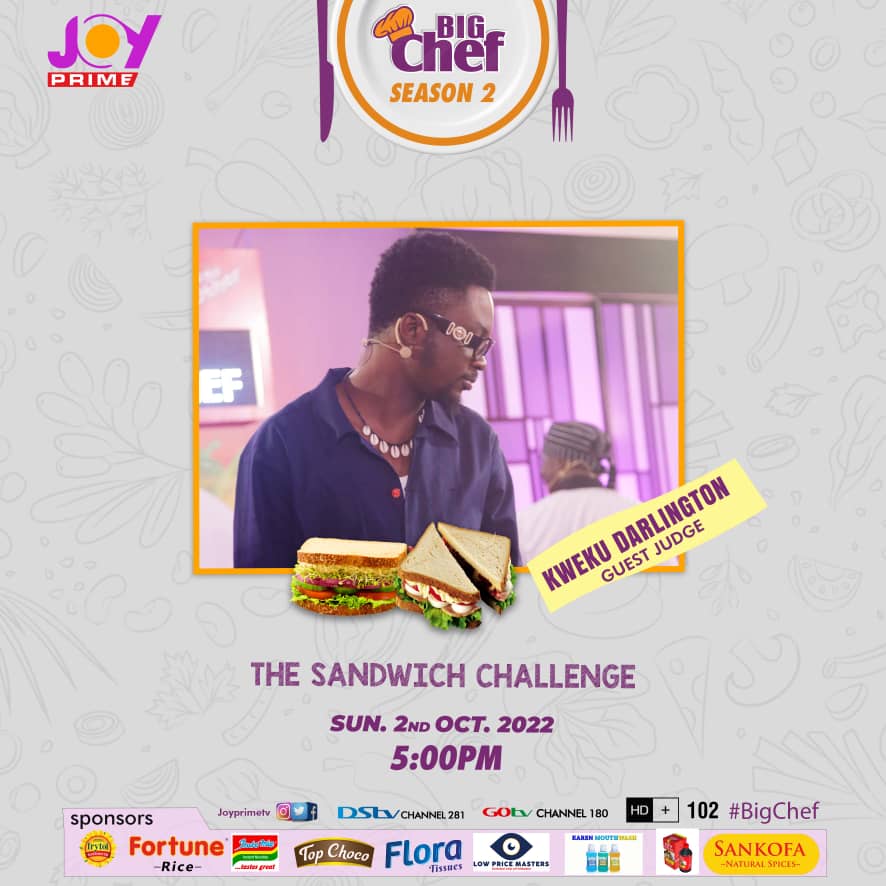
But thanks to the intervention of Guest Judge, Kwaku Darlington, at least one contestant would have bowed out of the Big Chef house.Guest Judge, Kwaku Darlington
Overall, the judges were largely happy with the presentations; an improvement from last week’s task – salad challenge.
Already, two contestants, Jethro and Gabriellah, have been evicted from the competition.
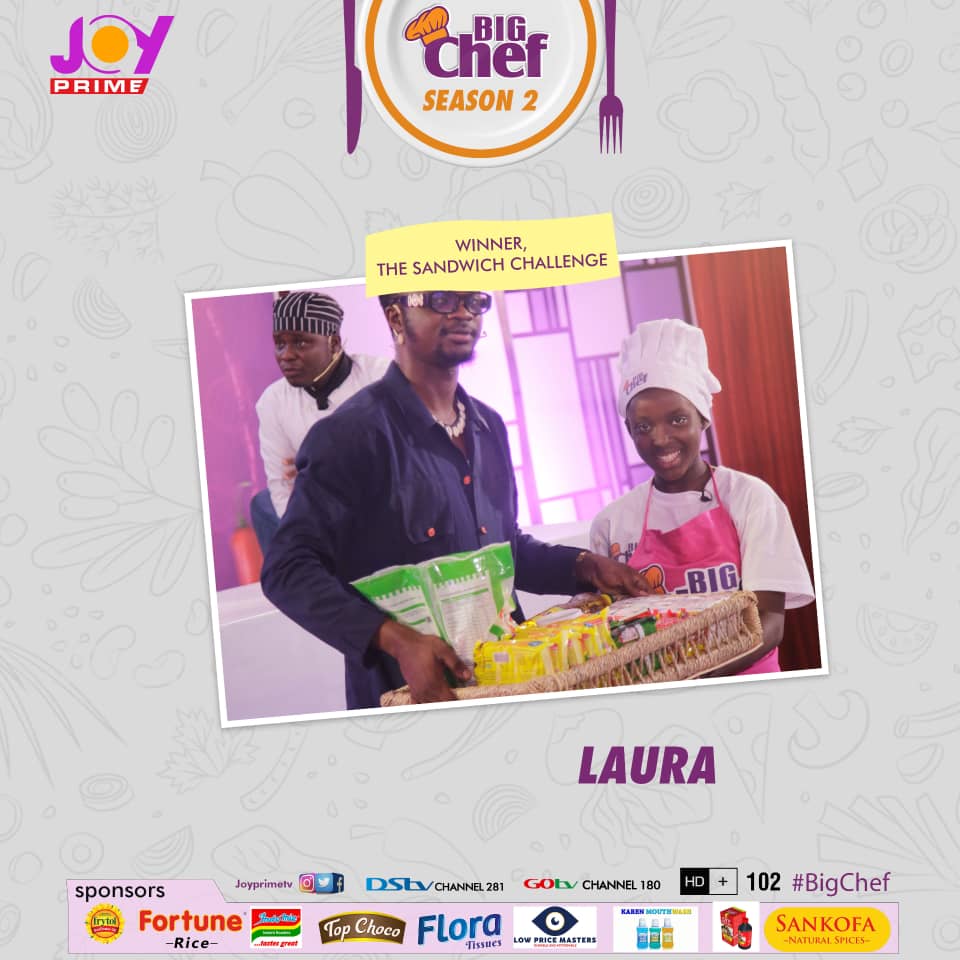
The remaining contestants will continue to put their acts together in order to avoid evictions and to keep hopes alive of clinching the GHS10,000 cash prize, fridge, stove, and amazing products from sponsors.Laura presented her prize for emerging Chef of the Week – Sandwich Challenge
Above all, the bragging right as the best kid chef in Ghana.
Meanwhile, Laura was adjudged the Chef of the Week for the second time.
She first won the Breakfast Challenge.
Season 2 of the Big Chef is proudly sponsored by Frytol Sunflower Oil, Fortune Rice, Indomie, Top Choco, Flora Tissues, Low Price Master, Karen Mouthwash, Perk Biscuit, City Blood Tonic, and Sankofa spices.
The biggest game show in Ghana, Step Up, on Joy Prime – the channel with the ultimate experience.
Four contestants were up for the challenge – answer 12 questions to hit the jackpot and walk away with a GHS5,600 cash prize as well as an all-expense trip to Dubai.
Cosmetologist, Claudio Wonder Magis, Geomatic Engineer, Onassis Aninakwa, Screenwriter, Jeffrey K. Aziaglo, and Customer Service Representative, Correta Clarke, tried to make history.
The Step Up Game Show is produced by Joy Prime and supported by Glovo – order anything, we deliver in minutes, and Adansi Travel – feel life’s beauty.
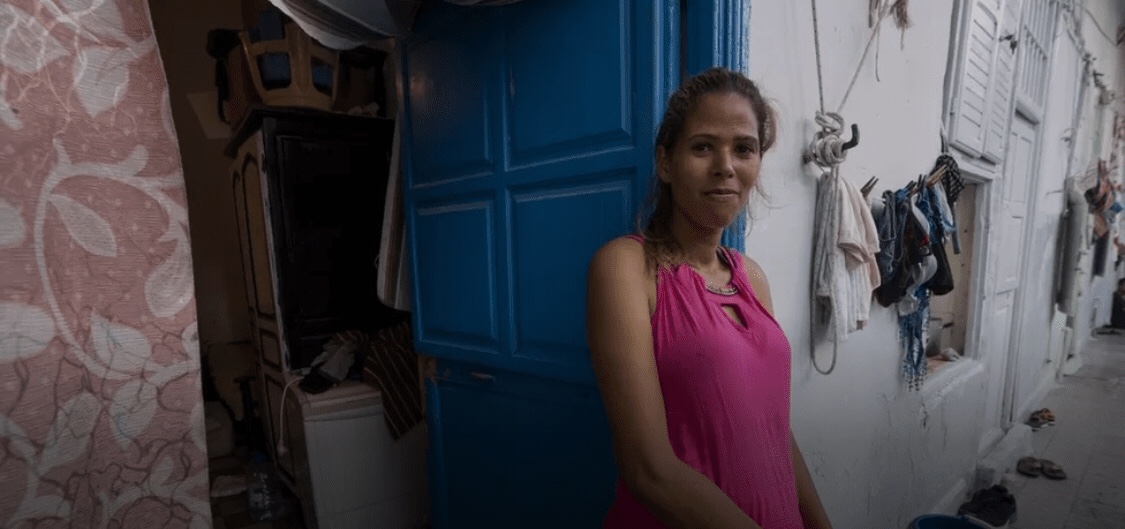
Hanan Erdidi’s husband has made a life-changing decision. The night before we meet in Tunisia’s capital, Tunis, he told her he was leaving.
Smugglers have offered him a seat on a boat to Italy and he’s decided to take the risk: he’s had enough of being squeezed into a tiny, damp room in a former army barrack in Tunis with their two young children.
He wants better for his family and now he’s seizing his chance.
“Sometimes we both cry because our kids don’t have toys to play with. Even the clothes they wear are second-hand, given to us by other people,” Hanan tells me.
“Sometimes we prefer to keep the kids at home and not take them to the market, because if we take them there, they will see fruit. We can’t afford even things like apples or grapes. We keep them indoors, so they don’t cry over seeing the things we can’t buy for them.”
Hanan is aware of the huge risk her husband is taking. They both desperately hope that it is worth it.
“My husband wants to leave to make our living conditions better. Either he improves our situation, or he dies at sea,” she says.
For men like Hanan’s husband, this is becoming a common choice.
Tunisia is in the grip of a cost-of-living crisis. The number of families in need has tripled since 2010, and now stands at almost one million.
Half of the country’s population is living in poverty. Last year, unemployment stood at almost 20%.
A decade ago, Tunisia was at the forefront of political change in the region
This is the country that ignited the Arab Spring. It’s long been considered one of the movement’s very few success stories.
For many countries in North Africa and the Middle East, the uprisings more than a decade ago brought instability and chaos.
But Tunisia managed to claw its way towards democracy. Its president of 23 years – Zine al-Abidine Ben Ali – was deposed and a new constitution was carefully crafted, based on public will.
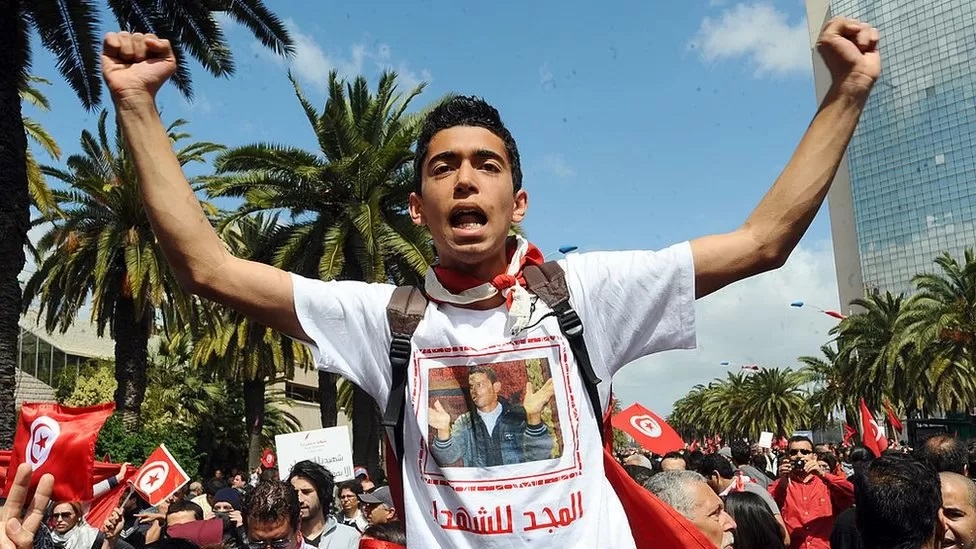
When thousands of chanting Tunisians first filled the streets at the end of 2010, marking the start of the Arab Spring, it was a visceral reaction to the death of a fruit and vegetable seller, Mohamed Bouazizi.
He set himself on fire outside a municipal building after having his cart confiscated by the authorities.
I wondered how fruit and vegetable sellers felt now, so I have gone to talk to them at one of Tunis’ many street markets.
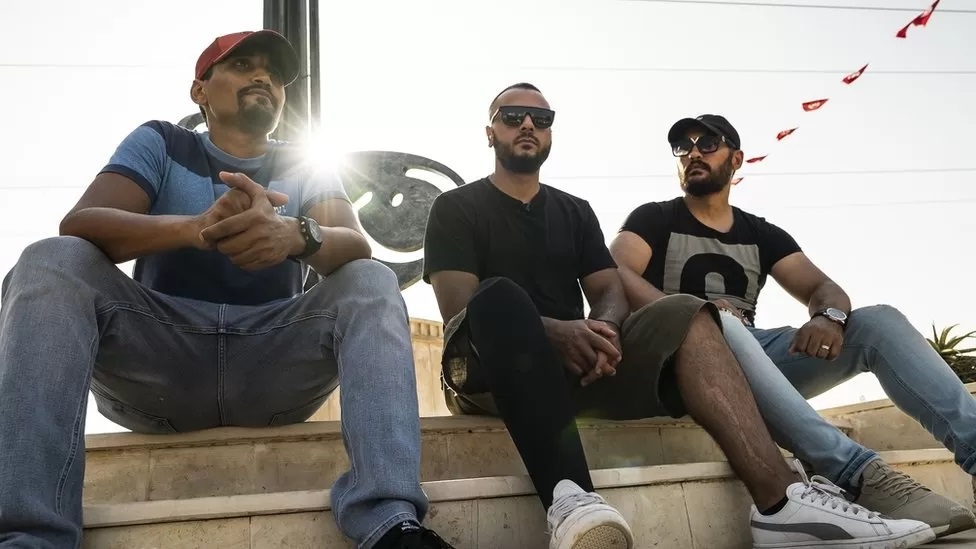
Among piles of shining red tomatoes and sun-plumped seasonal fruit, a theme emerges – these men are saving whatever money they can, and then spending it all on dangerous boat trips, believing they will be better off in Europe.
Italy is the nearest coast to aim for. People tell me that if they fail to reach their destination, they keep on trying.
They are unlikely to be deterred by a new right-wing government, which has promised a tough response to irregular migration, taking office following Sunday’s election.
One of them, Seif Eddin Hassouine, details how he has already spent $4,000 (£3,600) on two unsuccessful boat trips, each time intercepted by coastguards and sent back home. But he is about to do it again.
“This country has no jobs, no money, it’s better to leave,” he says.
Rachid Ben Jaafar, selling watermelons from a nearby stall, agrees: “Prices are high, life is very expensive, I can’t afford it any more. There’s no oil or sugar. Sometimes there’s no bread. How can people live? What can people do? All ways are closed.”
The original Arab Spring uprisings are branded deep into the memory of people here.
Walid Kassraoui sacrificed more than most. He was shot in the leg while demonstrating and it couldn’t be saved. Now he’s struggling to get a job, his prosthetic limb a daily reminder of what he’s lost.
Walid Kassraoui (C) is a father-of-two who lost his leg during the Arab Spring uprising
As we stand in the same street where he protested, he shows me a sign in the road. It lists the names of those who died there, including one of his closest friends.
“During the revolution, the slogans were all about finding jobs, freedoms and national dignity,” he remembers. “Unfortunately, jobs and national dignity have not been achieved over the past 12 years. I’m a dad of two kids who are growing, I was hoping to raise them in better conditions, but unfortunately I can’t.”
But those hard-fought rights and freedoms are being eroded as people hope they can trade them for jobs and better economic prospects.
President Kais Saied, a constitutional law professor, along with a small group of hand-picked allies, wrote a new framework for the country’s constitution, concentrating power in his own hands.
It was the culmination of a process which started in 2021, when he sacked the prime minister, dissolved the government and suspended parliament.
In July, a referendum put these changes to the people, but the result was always a foregone conclusion.
In just a few hours, Tunisia’s constitutional landscape had rolled back more than a decade.
But for ordinary Tunisians, the focus now is on how to feed their families or find a job.
Left behind and desperately hoping the sea will spare her husband, Hanan sees a bleak future ahead of her.
“My mother and father are dead,” she cries. “I don’t have brothers, or anybody else. He is my mum, dad, brother – he’s everything to me. If he dies in the sea, I will be orphaned once again.”
The General Manager, External Communications at the Electricity Company of Ghana (ECG) has said that the power distribution company is conducting an audit into its systems.
According to Charles Nii Ayiku Ayiku, the audit will help ascertain what caused the interruptions in the purchase of electricity credits by customers using both new and old prepaid metres, in some parts of the country.
Speaking on The Probe on Sunday, he said that “for every system when there are issues you do a system audit and that is what we are doing now, trying to make sure we audit the system to understand what happened.”
Mr Ayiku added that “I am sure at the end of the day we will come to a conclusion but for now, effort and concentration are to make sure that we get our systems up and running.”
Despite the challenges, the General manager insisted that the ECG systems are not vulnerable and believes the audit will clearly spell out what went wrong.
This comes after some ECG prepaid consumers were left in the dark after a technical challenge affected the purchase of credits for their meters.
Customers in Volta Region, Takoradi, Tema, Cape Coast, Kasoa, Winneba, Swedru, Koforidua, Nkawkaw and Tafo were affected.
On October 1, ECG said they had fixed the vending challenges, however, some consumers were still reporting challenges on Sunday morning.
Again, Mr Ayiku apologised to consumers noting that although most of the challenges have been fixed, some consumers in the Ashanti Region may still have issues.
“We are very sorry and apologise to our customers, we do understand what they’ve gone through, we as a company we are not happy about the situation, we are very sorry and we are working very hard to make sure that we will not experience this again.”
Meanwhile, the Member of Parliament for Ningo-Prampram, Sam George, has alleged that the technical challenges the Electricity Company of Ghana (ECG) is currently facing is a deliberate attack on its system.
According to him, the challenge which has left many prepaid consumers in the dark for days was carried out by some “criminal” personnel in the institution.
In a post on Facebook, Sam George wrote “my information points to a group that has been siphoning over GH200 million, you read that right. Every month! Yes, you read that right.”
He therefore called on the state to investigate these corrupt activities at the office of the ECG.
“The State security apparatus must take this matter up and ensure the safety and protection of the MD and his team seeking to uncover the mess,” he added.
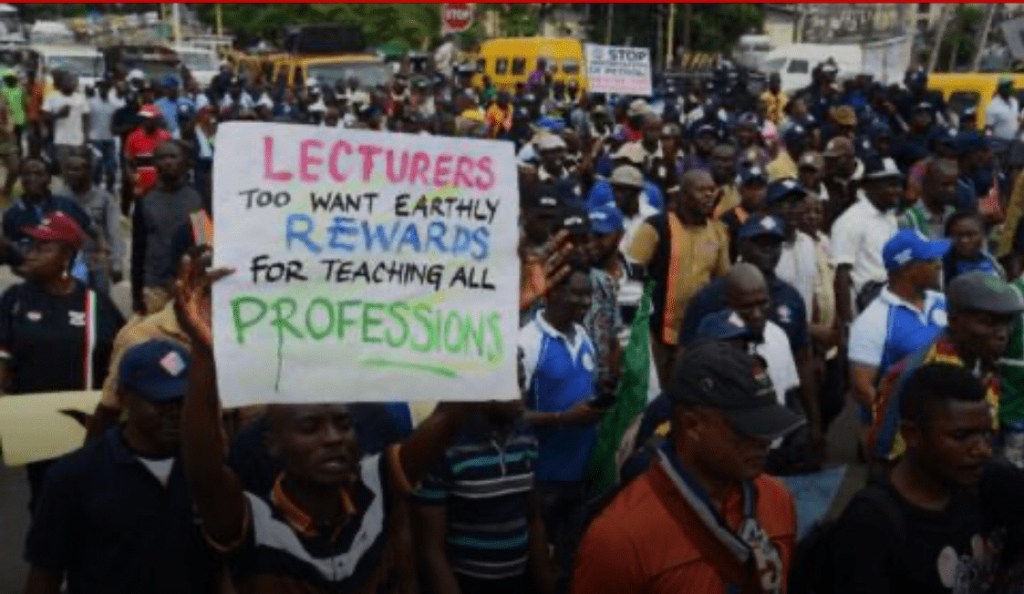
Nigeria’s striking university teachers say they will appeal against the order of an arbitration court directing them to suspend their seven-month strike and return to work.
The National Industrial Court gave the order on Wednesday while it considered a government’s suit challenging the strike.
But the Academic Staff Union of Universities said its lawyers were already filing an appeal and urged its members to “remain calm”.
The government approached the court to stop the lecturers from continuing their strike, after both parties failed to resolve their differences. It said the strike would result in irreparable damage to Nigerian students and to the country if not suspended.
For the past seven months, public university lecturers have suspended classes across the country due to pay disagreements with the government.
The lecturers accused the government of failing to fulfil some of the agreements reached with the union 10 years ago.
The umbrella body of university students in Nigeria, the National Association of Nigerian Students (Nans), had earlier welcomed the court order, describing it as a win-win situation for all the stakeholders in the matter.
The students’ union however urged the government not to see the ruling as a victory over the lecturers.
A Magistrates’ Court in the northern Nigerian city of Kano has remanded in custody a Chinese businessman who is accused of killing his Nigerian girlfriend.
The suspect, Geng Quanrong, allegedly forced himself into the young woman’s family house, attacked her and slit her throat with a knife last weekend.
The killing sparked public outrage across Nigeria – with social media users and the victim’s family calling for justice.
Mr Geng, 47, was arraigned on Wednesday and government prosecutors accused him of murder.
But they asked the court to grant them time to prepare proper charges. The suspect has not yet entered a plea.
A spokesperson for the judiciary in Kano state told the BBC the case had been adjourned to 13 October.
The victim, Ummukulthum Sani Buhari, 22, was taken to a local hospital after the stabbing. Doctors confirmed she was dead on arrival.
The suspect was arrested as he attempted to flee the scene – after residents raised the alarm. Since then he has been in police custody.
It is unclear what exactly triggered the incident on Friday night, but residents and family sources say the estranged lovers had started having problems when the deceased indicated she was no longer interested in marrying the Chinese man.
The police have arrested a pastor in Mankessim in the Central Region after he confessed to helping a chief kidnap, kill, and secretly bury a 22-year-old nurse trainee.
The body of Georgina Asor Botchwey was exhumed by the pastor and police investigators on Tuesday in the room of Nana Crack, the chief who is the Tufuhen of Ekumfi Akwakrom.
According to sources, Nana Crack, who is also the president of the Mankessim Traders Association, and his accomplice, kidnapped the nurse after engaging in sexual acts with her.
They then killed her and buried her in one of the chief’s apartments.
The pastor was arrested in Cape Coast and admitted to the crime. He then led the police to the chief’s residence, where the victim’s body was exhumed.
There had been reports in Mankessim announcing Miss Asor Botchwey was missing.
The notice read, “Georgina Botchwey went for an interview at Cape Coast on Wednesday and up till now she cannot be found; her phone is off. Please, anybody with information about her should call 0208503126 or 0247048711 “
The victim’s body was reportedly buried nearly three weeks ago.
Along with the body, the victim’s bag, shoes, and other possessions were also found at the chief’s house.
Residents are requesting that the police ensure that justice is served after expressing their surprise and outrage at the incident.
A resident asked, “How on earth will a chief get involved in such a horrible act?”
The town was thrown into a state of shock with people trooping to see where the body of the trainee nurse was secretly buried.
Cephas Authur, an assemblyman for the area, urged the Inspector General of Police (IGP) to increase security in Mankessim and its surroundings.
He claims that this is not the first time that something like that has occurred in Mankessim.
“This is the fifth occurrence of this kind of incident this year. I’m requesting that the police ensure justice is served and the chief and pastor are brought to justice,” he said.
The victim’s body has been deposited in the mortuary of the Cape Coast Teaching Hospital for preservation and autopsy.
The government, through the Ministry of Finance, has secured a $30m AfDB grant to support the economic recovery of selected institutions.
The Post COVID-19 Skills Development and Productivity Enhancement Project (PSDPEP) seeks to build health-related skills in higher education, restore livelihoods, strengthen public communication and create jobs among the youth and women.
About $4 million would be given to Small and Medium Enterprises as loans at a reduced rate to enable them to withstand the impacts of the pandemic.
The PSDPEP beneficiaries include Social Investment Fund, Microfinance and Small Loans Centre, the Biotechnology Centre, the School of Nursing and Midwifery, and the Microbiology Centre.
The rest are the Ministry of Gender, Children and Social Protection, the Environmental Protection Agency, and the National Vocational Training Institute.
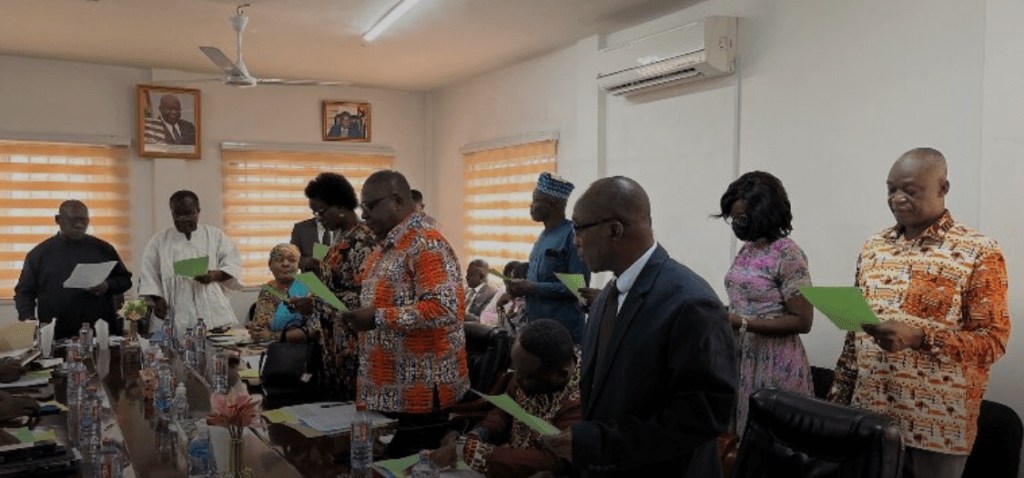
Mr Osei Bonsu Amoah, the Deputy Minister of Local Government and Rural Development, inaugurating the steering and technical committees to supervise the implementation, commended the AFDB for the support, “especially at the time where donor funding was weaning”.
He said PSDPEP’s goals were in line with the Government’s National Decentralisation, Policy and Strategy Programme that focused on local economic development, physical decentralisation and rural development.
“Health is a major component and we are happy this is coming on board to help. In meeting the targets of this project majority of our strategies on growth and development will be actualised,” he said.
Mr Amoah advised the committees to work assiduously to ensure the expected outcomes were met timely and successfully.
The Deputy Minister also urged the committees to consider issues of cost-efficiency and cost-effectiveness.
The Committees have been tasked to, among others, ensure that all project beneficiary institutions perform their roles satisfactorily and also ensure that the project implementation failures are corrected expeditiously.
The membership comprises officials of the Ministries of Local Government and Rural Development and Decentralisation, Education, Health, Finance, Environment, Science, Technology and Innovation.
The rest are the Gender, Children, and Social Protection, the Ministry of Employment and Labour Relations; the University of Ghana, MASLOC; the Ministry of Information, the Ghana Statistical Service, and the Ghana Enterprises Agency (GEA).
The Project Technical Committee will regularly review project implementation and report to the Project Steering Committee and its membership of all project beneficiaries.
Mr Kofi Frimpong, the Executive Director, Social Investment Fund, said the COVID-19 pandemic disrupted many sectors of the economy, especially the health and small and medium enterprises, hence the focus of the project on skills development in those areas.
He stated that the credit and entrepreneurship arm of the project was expected to benefit at least 24,800 directly and 50,000 indirectly through the Bank’s Youth Entrepreneurship and Investment Fund (YEIB).
Mr Emmanuel Fordjour, Desk Head of AfDB at the Ministry of Finance, said the project was well thought-out and that the GNA, would see some of its offices renovated and re-tooled to deliver on its mandate.
The University of Ghana would be empowered to be able to develop vaccines.
Mrs Yvonne Quansah, the Director, External Resource Mobilisation and Economic Relations at the Ministry of Finance, who Chairs the PSDPEP Steering Committee, gave an assurance that it would discharge its duties to ensure the effective implementation of the Project.
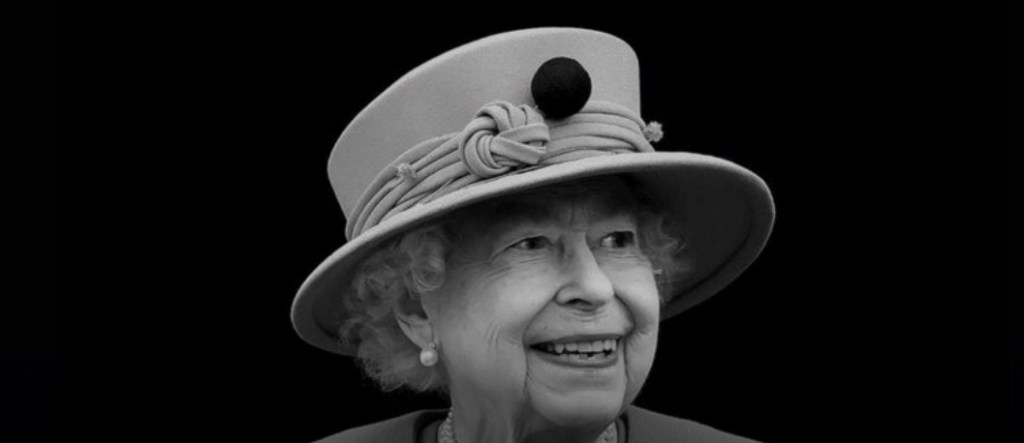
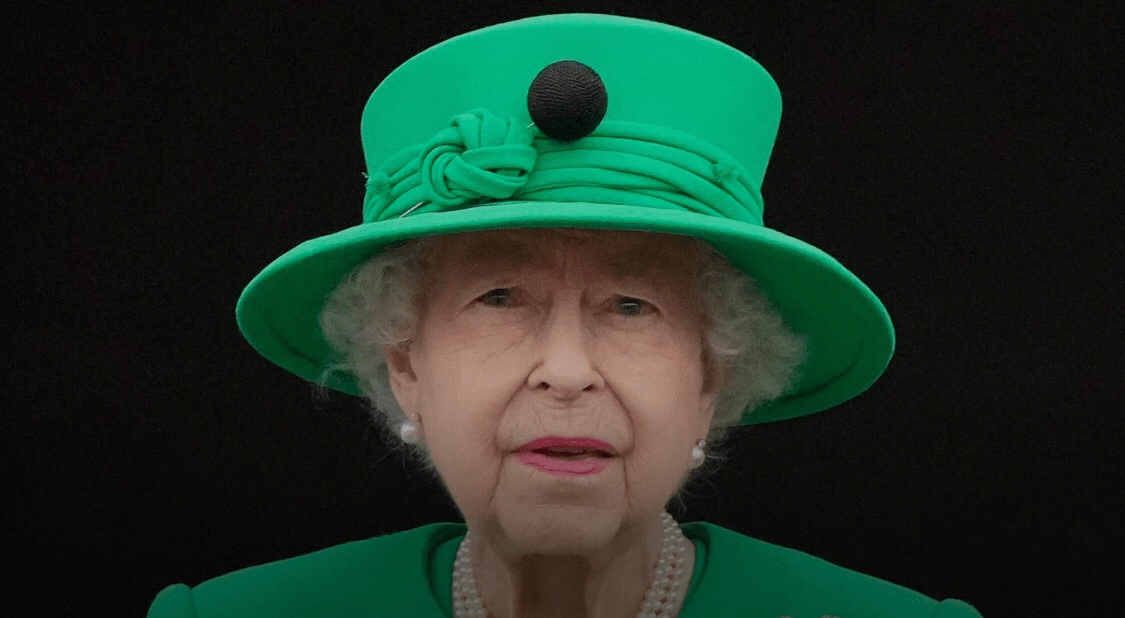
After days of lying-in-state, the body of the late Queen Elizabeth II will begin its final journey on Monday morning as part of a grand state funeral – first to Westminster Abbey, for a religious service in front of a congregation of thousands, and then on to Windsor Castle for a more intimate committal service and, finally, a private burial.
It will be a day of emotion, pomp and ceremony the like of which has not been seen since the last state funeral, of Winston Churchill, almost 60 years ago. The Queen made personal additions to the plans, Buckingham Palace has said.
Here is a breakdown of the day’s events on Monday 19 September.
The Queen’s lying-in-state at Westminster Hall in the heart of London will come to an end in the early morning. Thousands have been queuing and filing by to view her coffin.
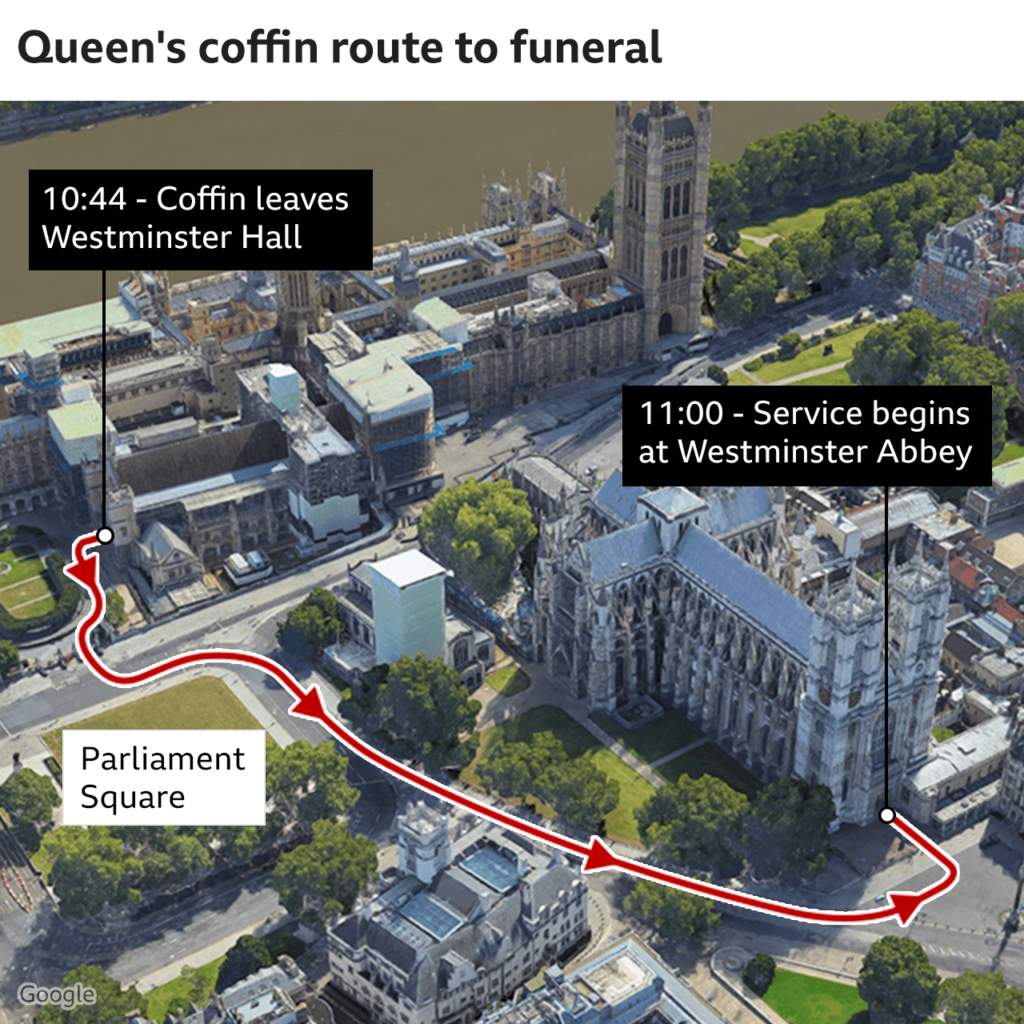
A short distance away, at Westminster Abbey, the doors will be opened for guests to start arriving ahead of the service at 11:00.
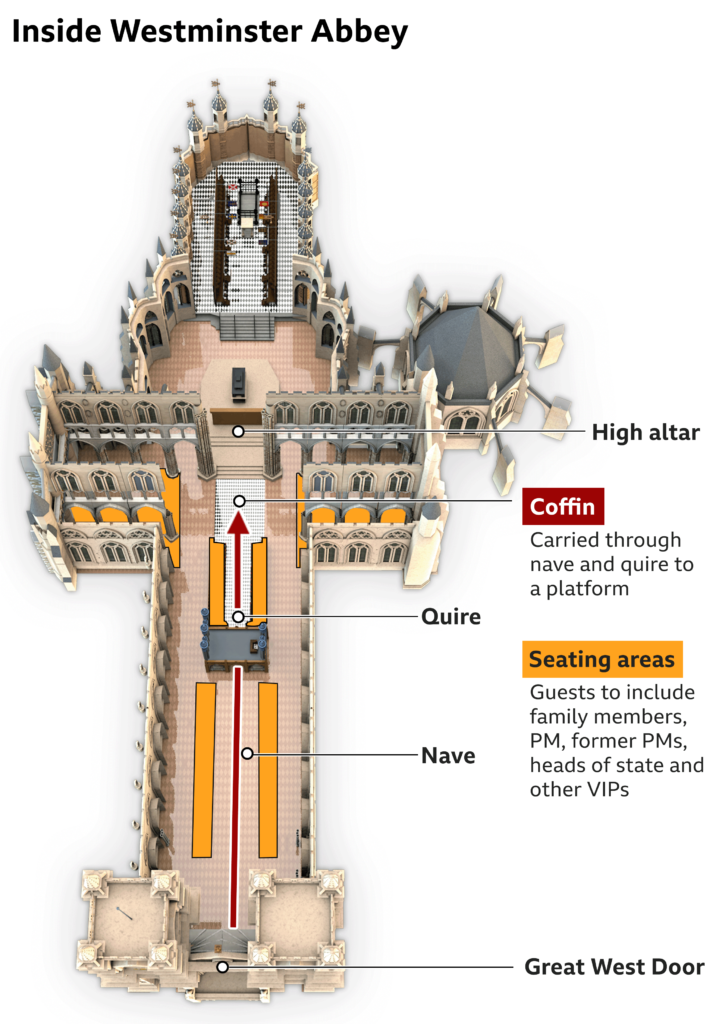
Heads of state from across the world have been flying in to join members of the Royal Family to remember the Queen’s life and service. Senior UK politicians and former prime ministers will also be there.
Members of royal families from across Europe, many of whom were blood relatives of the Queen, are expected – Belgium’s King Philippe and Queen Mathilde and Spain’s King Felipe and Queen Letizia will be there.
At this point, the ceremonial part of the day will begin in earnest, as the Queen’s coffin is lifted from the catafalque where it has been resting since Wednesday afternoon, and taken to Westminster Abbey, for her funeral service.
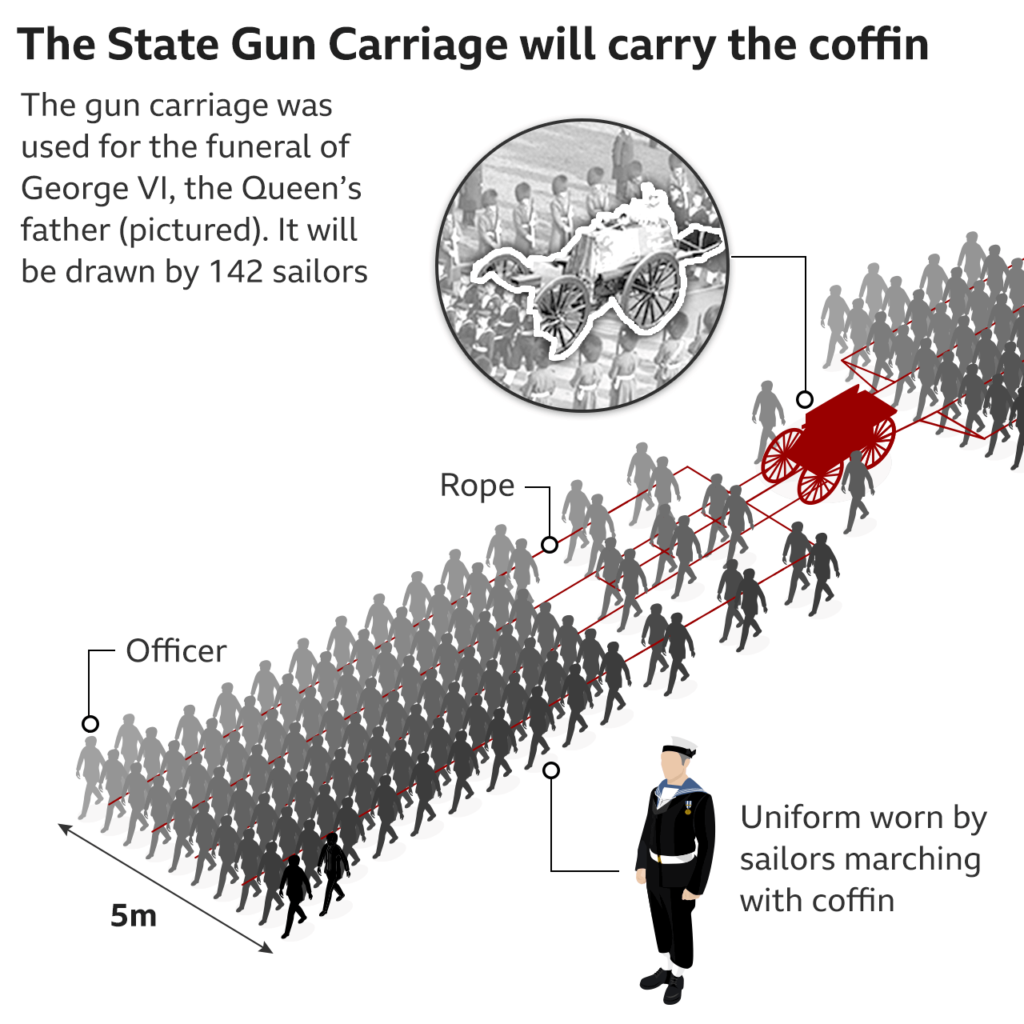
She will be carried on the State Gun Carriage of the Royal Navy, drawn by 142 sailors. The carriage was last seen in 1979 for the funeral of Prince Philip’s uncle, Lord Mountbatten and was used for the Queen’s father, George VI, in 1952.
Senior members of the Royal Family, including the new King and his sons Prince William and Prince Harry, will follow the gun carriage in procession.
The Pipes and Drums of the Scottish and Irish regiments will lead the ceremony, along with members of the Royal Air Force and the Gurkhas.
The route will be lined by the Royal Navy and Royal Marines and a guard of honour will stand in Parliament Square made up of all three military services, accompanied by a Royal Marines band.
The Queen’s funeral service, expected to be attended by 2,000 guests, will begin at Westminster Abbey.
It will be a state funeral – an event typically reserved for kings or queens, which follows strict rules of protocol, such as a military procession and the lying-in-state.
The Abbey, hosting the funeral service, is the historic church where Britain’s kings and queens are crowned, including the Queen’s own coronation in 1953. It was also where the then-Princess Elizabeth married Prince Philip in 1947.
There hasn’t been a monarch’s funeral service in the Abbey since the 18th Century, although the funeral of the Queen Mother was held there in 2002.
The service will be conducted by the Dean of Westminster David Hoyle, with the Archbishop of Canterbury Justin Welby giving the sermon. Prime Minister Liz Truss will read a lesson.
Towards the end of the funeral service the Last Post – a short bugle call – will be played followed by a two-minute national silence.
The national anthem and a lament played by the Queen’s piper will bring the service to an end at about midday.
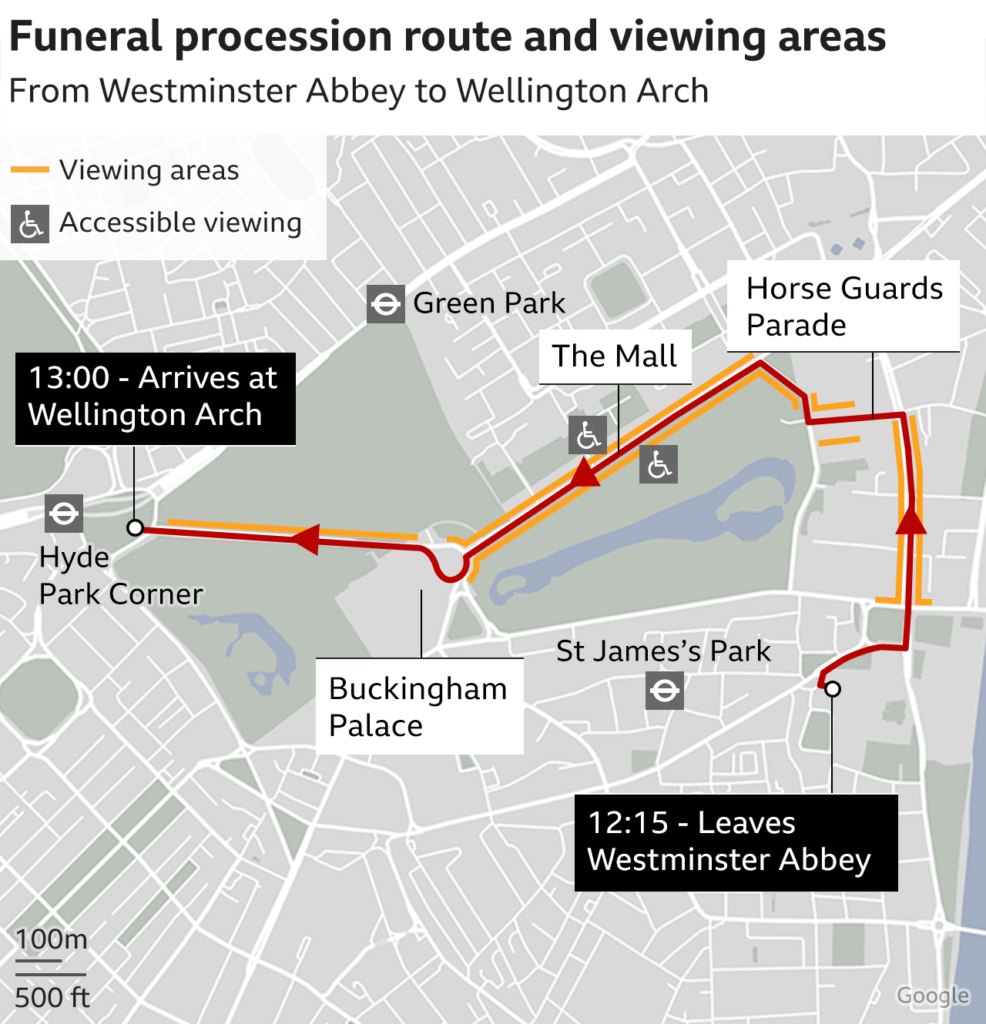
Following the service, the Queen’s coffin will be drawn in a walking procession from the Abbey to Wellington Arch, at London’s Hyde Park Corner.
With the route lined with military personnel and police, Big Ben will toll at one-minute intervals as the procession moves slowly through the streets of the capital. Gun salutes will also fire every minute from Hyde Park.
People can watch the procession in person from designated viewing areas along the route.
The procession, led by the Royal Canadian Mounted Police, will be made up of seven groups, each with its own band. Members of the armed services from the UK and the Commonwealth, the police and the NHS will also be involved.
Once again the King will lead members of the Royal Family walking behind the gun carriage bearing the Queen’s coffin.
Camilla, the Queen Consort, the Princess of Wales, the Countess of Wessex and the Duchess of Sussex will join the procession in cars.
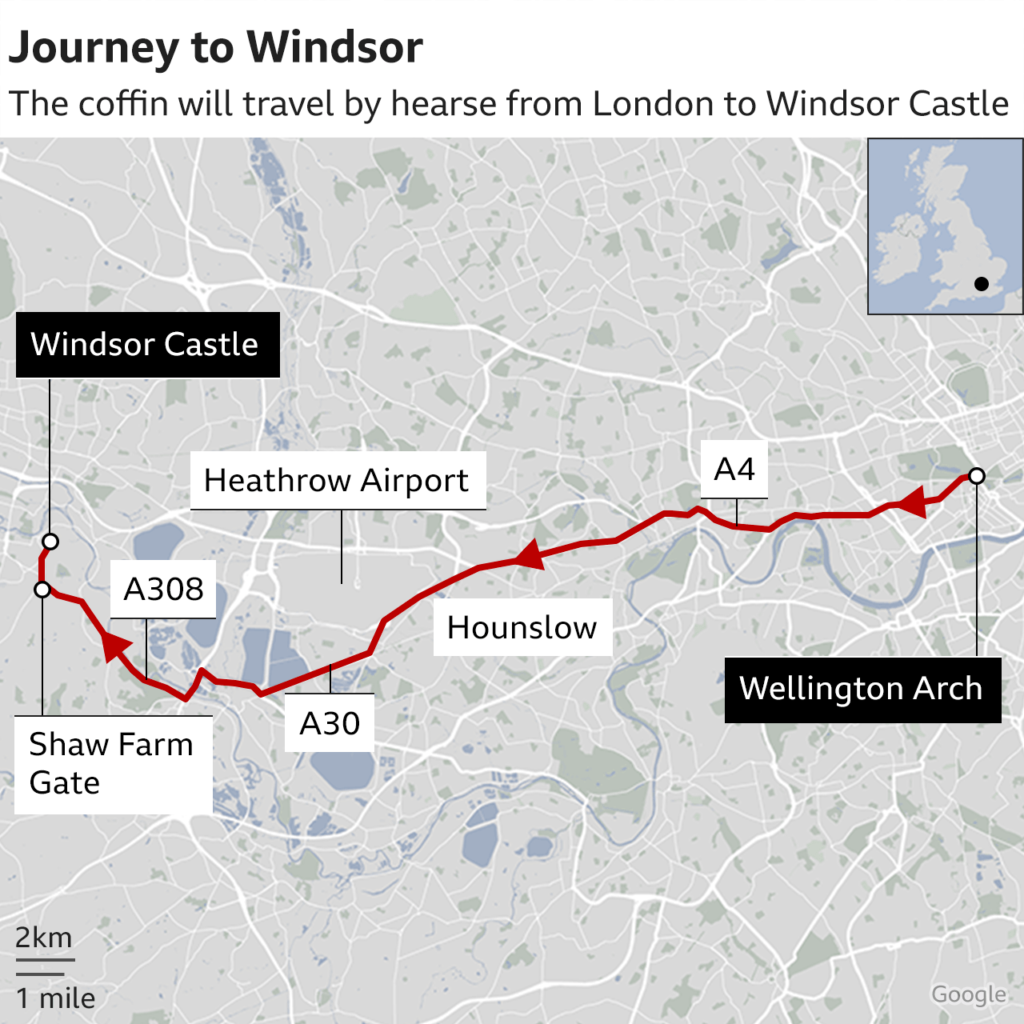
Once at Wellington Arch, at about 13:00, the coffin will be transferred to the new State Hearse for its final journey to Windsor Castle.
The castle, continuously inhabited by 40 monarchs across almost 1,000 years, had special significance to the Queen throughout her life. As a teenager she was sent to the castle during the war years as London faced the threat of bombing, and more recently she made it her permanent home during the coronavirus pandemic.
The hearse is expected to arrive for a walking procession up Windsor Castle’s Long Walk. The three-mile (5km) avenue will be lined with members of the armed forces.
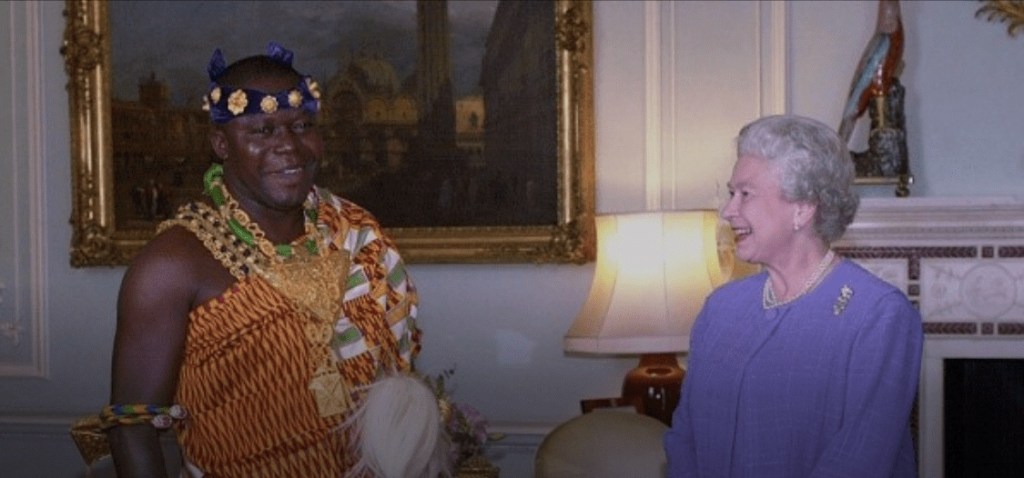
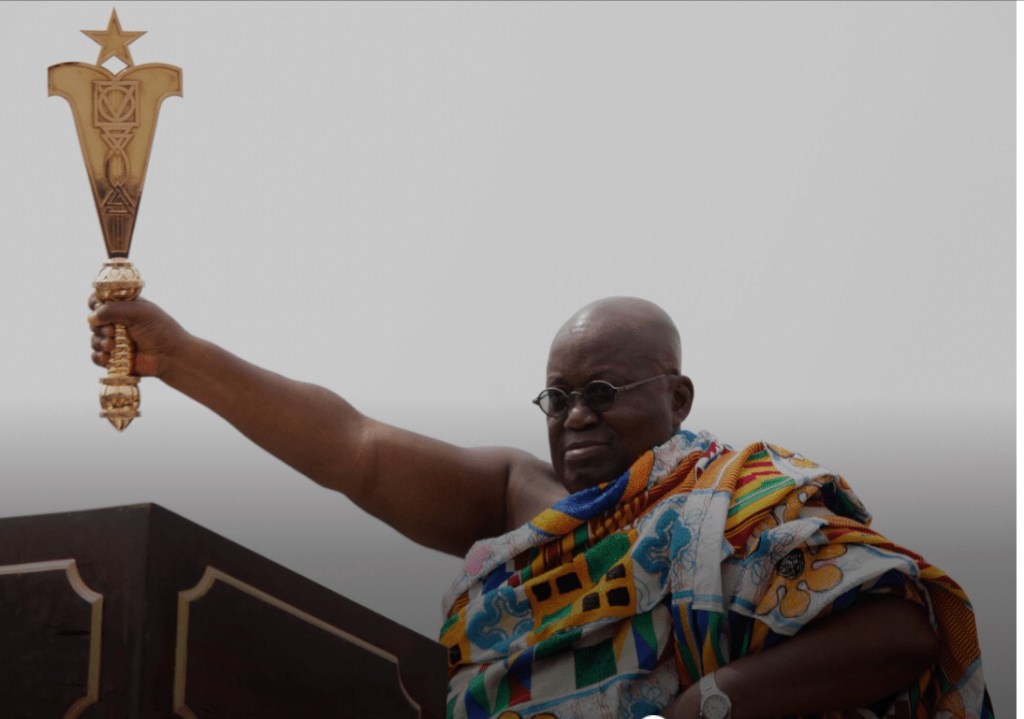
Asantehene Otumfuo Osei Tutu II will be unavailable for the funeral of Queen Elizabeth II.
According to reports, the ruler of the Ashanti Kingdom has communicated the development to Buckingham palace.
The queen died on Thursday, September 8, at age 96.
Today, the funeral service will be held at Westminster Abbey before the coffin is taken away for committal and burial at Windsor.
Otumfuo was invited through the Ghana High Commission in the UK and expected to be present for the Queen’s Lying-In-State, the King’s Reception and the State Funeral Services and the Foreign Secretary’s Reception.
He was billed to be present together with his wife, Lady Julia Osei Tutu.
It is unclear what has necessitated Otumfuo’s absence.
However, sources close to the Manhyia Palace say the development has been communicated to King Charles III’s Household and the Foreign, Commonwealth and Development Office.
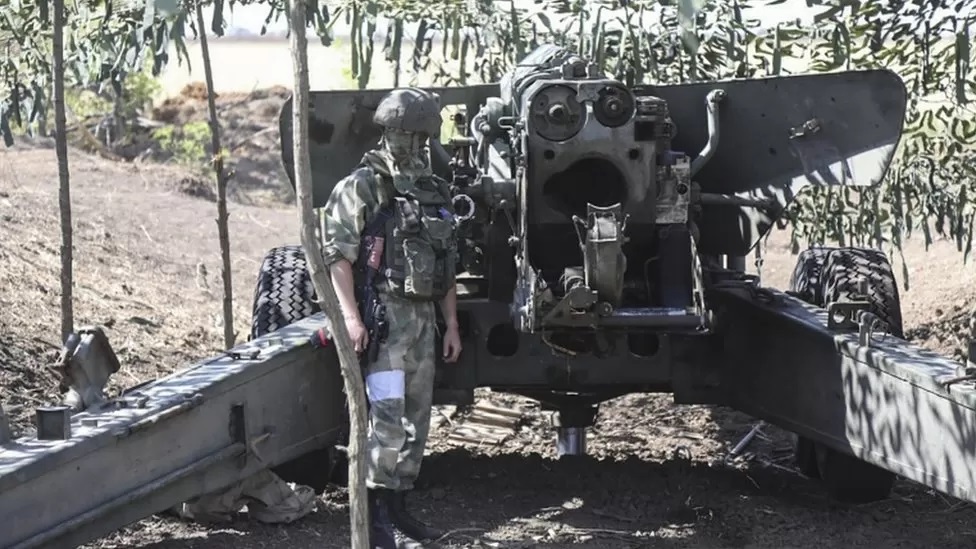
It, however, remains unlikely that it intends to use such weapons.
Tactical nuclear weapons are those which can be used at relatively short distances, as opposed to “strategic” nuclear weapons which can be launched over much longer distances and raise the spectre of all-out nuclear war.
Russian forces in Kherson this month
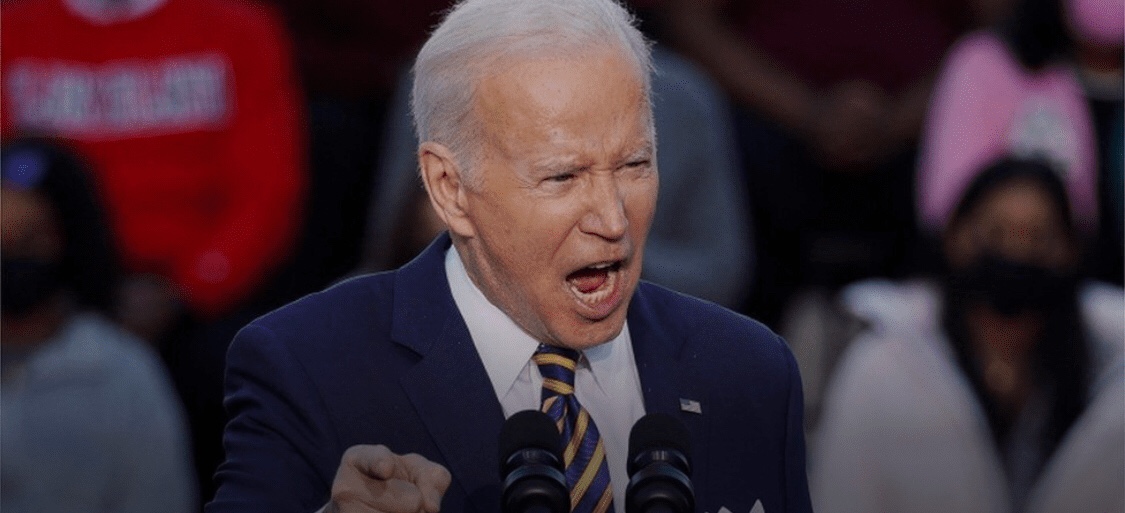
In an interview with CBS’ 60 Minutes correspondent Scott Pelley in the White House, President Biden was asked what he would say to President Putin if he was considering using weapons of mass destruction in Ukraine.
“Don’t, don’t, don’t,” was President Biden’s response.
Mr Biden was then asked what the consequences would be for Mr Putin if such a line was crossed.
“You think I would tell you if I knew exactly what it would be? Of course, I’m not gonna tell you. It’ll be consequential,” Mr Biden responded.
“They’ll become more of a pariah in the world than they ever have been. And depending on the extent of what they do will determine what response would occur.”
The war in Ukraine has not gone as well as the Kremlin had hoped.
In recent days, Ukraine says it has recaptured more than 8,000 sq km (3,088 sq miles) of territory in the north-eastern Kharkiv region.
Ghanaian-born US-based musician, Richmond Kyei Manu popularly known as CashBiggy has released his maiden song titled ‘Obiara Difor’.
The talented hip life musician used his maiden work which translates in English as ‘Everyone is Guilty’ to send a strong message to all Ghanaians.
The three-minute is produced by Pee GH and seeks to inspire patriotism amongst the populace.
While chastising leaders, CashBiggy communicates that everyone needs to chip in their quota for the country to be transformed.
The Ghanaian music industry is vibrant and CashBiggy promises to carve an exceptional niche that will boost his music craft beyond the borders of Ghana.
Nonetheless, CashBiggy is a Ghanaian-born US-based afrobeat artiste passionate about his roots.
Born and raised in Ghana, Richmond Kyei Manu, loved music and practiced often.
He moved to the United State of America after graduating from Asanteman Senior High School and has worked his way to become President of Richma Logistics a trucking company based in the US.
But since his first love is music, he has decided to revisit his craft.
CashBiggy seeks to use his talent to garner raise self-awareness and ensure patriotism is reinstated in the country.
The song is now available on all streaming platforms.
Ghanaian contemporary Afrobeats singer and songwriter, Paul Andrew Nii Darko, also known as, Darkovibes, is excited to share new music with his teeming fans.
Following the release of the hit single,“ Je’Mapelle”, with Nigerian singer, Davido, and afterward, “Jealousy“, Darkovibes has emerged with a new release titled “Happy Day“ complemented by production from the exceptionally talented producer, P.Priime.
About the song, Darkovibes explained that, “Happy Day makes me feel like taking a highway cruise with a beautiful woman by my side just enjoying that vibe and good company.”
He added that “I travel a lot, and perform to many different audiences. My lifestyle has definitely played a role in the way I made this song”.
Speaking on working with Darkovibes, P.Priime said, “Darkovibes is easily one of the most talented musicians I’ve been blessed to work with. He is always in the studio ready to work. “Happy Day” was recorded whilst we were on a holiday in Ada, in Ghana.”
“Happy Day” is accompanied by a fashionable aesthetically pleasing music video which will activate the journey to the release of his much-anticipated EP, “BUTiFLY”. I can’t wait for my fans to hear this one! I feel like my sound has improved and I’ve grown a lot musically,” Darkovibes added regarding his upcoming EP which is scheduled for release later this year.
Darkovibes displays an excellent interpretation of multilingualism on “Happy Day” as he effortlessly flows over a jazzy afrobeat production by singing in Ga, Twi and Pidigin.https://www.youtube.com/embed/g2EMdSw8kv0
It’s a “Happy Day“ for the sensational Ghanaian superstar, Darkovibes! The song is available on all digital streaming platforms and its music video is out now on YouTube
The Deputy Minister for Employment and Labour Relations, Bright Wireko Brobbey, has challenged the youth, particularly fresh graduates, to create their own jobs rather than depending on white-collar jobs.
According to him, there are lots of fulfillment in one being an entrepreneur instead of chasing after non-existent white-collar jobs.
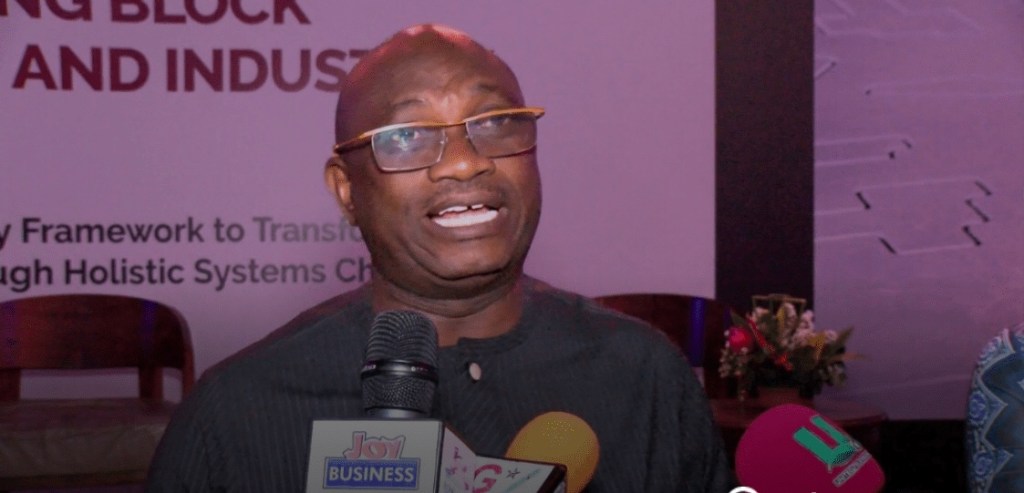
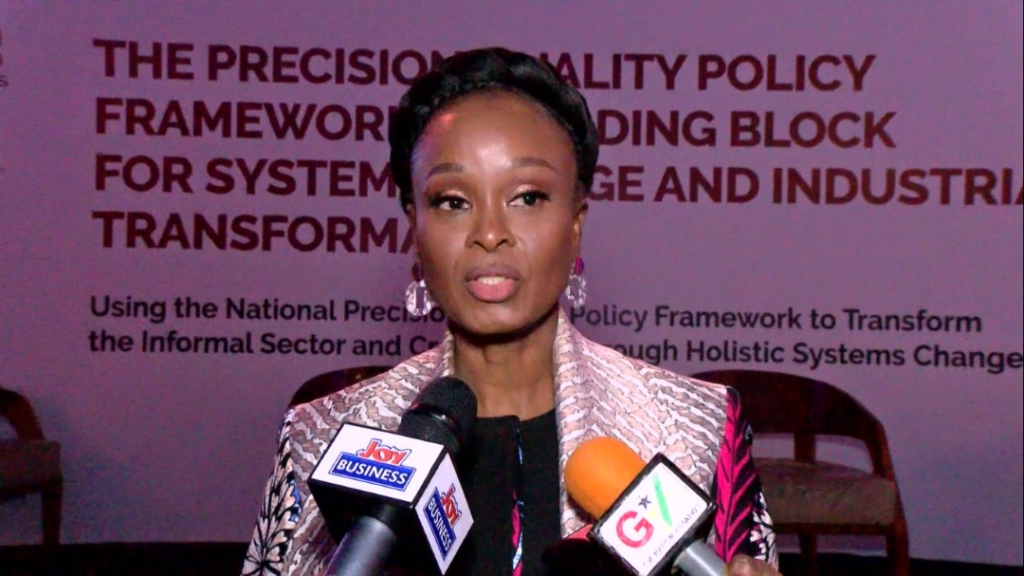
He made this call at a conference on precision quality and standards building organised by Design and Technology Institute (DTI) on the theme “the precision Quality Policy framework: A building block for systems change and industrial transformation”.
“I have not seen any wealthy person in the formal space who works in the civil or public service. Every wealthy person in society is an entrepreneur. Anyone who is able to put his creativity into action and create jobs is rich.”
“White collar jobs are not the only jobs one can do. So we should not be over reliant on government to create jobs”, he said.
He further mentioned that adding value and standardising wares will ensure the accomplishment of the industrialised economy Ghana dreams off.
“What we are doing now is to encourage and ensure that standards are added by way of value to products. The youth in the informal space can only reap the benefits of their labour after they have been able to standardise their products”.
“Patronage will increase and the products can also be exported since it meets world standards. Gradually this will bring about the industrialisation the country seeks achieve”.
On championing the importance of precision quality and standardisation for the informal sector, Chief Executive Officer and Founder of Design and Technology Institute (DTI), Constance Swaniker said Ghana can only kick start her industrialisation agenda when players in the informal sector fully understand what it means to standardise their products and services.
“For the average artisan, if I gave you the order to produce six chairs, each of the six will not look the same. We can only begin the industrial agenda if we begin to understand what scalability looks like. Once you get an order to produce 200 chairs, will each chair look the same? Proper scalability occurs when precision quality is ensured in the delivery process”.
“It is only when we are able to scale properly that we can achieve our industrialization agenda”, she said.
Precision Quality is a term coined by the Design & Technology Institute (DTI) of Ghana to highlight the value of precision in industry, services and processes to ensure that goods, services and products are of world class quality.
The conference which seeks to advocate for precision and quality delivery in the country’s production line also highlighted the need for stakeholders to be deliberate in creating an ecosystem which produces entrepreneurs.
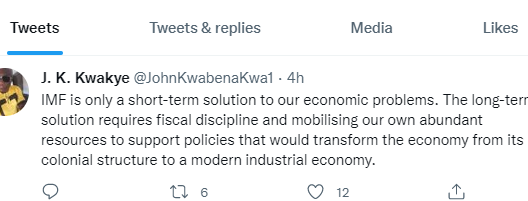
The Director of Research at the Institute of Economic Affairs (IEA), Dr John Kwakye, has described government’s engagement with the International Monetary Fund (IMF) as a short-term solution to the country’s economic challenges.
According to him, the long term solution requires fiscal discipline and mobilising the country’s own abundant resources to support policies that would transform the economy.
In a tweet, the economic expert said “IMF is a short term solution to our economic problems”.
“The long term solutions requires fiscal discipline and mobilising our own abundant resources to support policies that would transform the economy from its colonial structure to a modern industrial economy”, he added.
The government has been engaging officials of the IMF to create an economic programme to deal with the challenges facing the economy.
However, some economists and the Ghana Trades Union Congress have expressed their concerns because of the conditions that an IMF programme comes with.
But others are of the view that an economic programme with the Fund is long overdue since the Ghanaian economy has lost credibility following the downgrade of its credit rating by all the three rating agencies (Fitch, Moody’s and S&P).
This has denied the country access to the international capital market, whilst inflation and the local currency have been impacted significantly.
I’m very determined for us to reach agreement with Ghana by December 2022 – IMF Boss
Despite all these challenges, the IMF Managing Director, Kristalina Georgiva, has reiterated his outfit’s commitment to reaching agreement with the government by the end of this year for an economic programme.
According to her, Ghana’s current economic woes is not a self-inflicted one but exogenous shocks such as COVID-19 and the Russian/Ukraine War.
Speaking with Joy News’s Benjamin Akakpo at the Africa Adaptation Summit in Rotterdam, Holland, Madam Georgiva, said the present economic imbalances is not due to bad policies by the government.
IMF new Mission Chief arrives in Ghana, meets Ofori-Atta, 1st Deputy Governor
Again, the new IMF Mission Chief for Ghana, Stephane Roudet, arrived in the country last week.
Mr. Roudet whose appointment took effect from September 1, 2022, paid a visit to the Minister of Finance, Ken Ofori-Atta and his team and the Governor of the Bank of Ghana and his team as well.
Mr Roudet’s visit lays the ground work for a full mission towards the end of September 2022.
Disney’s “The Little Mermaid” is coming back to theaters next year, with Halle Bailey bringing a live-action Ariel to the big screen for the first time, and the studio unveiled a sneak peek at the new film at its D23 Expo.
It’s short but oh so sweet, with a seconds-long glimpse at Ariel in action, singing some impressive notes from “Part of Your World.”
The film, directed by Rob Marshall, who has also helmed “Chicago” and “Mary Poppins Returns”, is being billed as a reimagining of the 1989 Oscar-winning animated musical classic.https://www.youtube.com/embed/0-wPm99PF9U
In addition to Bailey, a singer who has also appeared on Freeform’s “grown-ish,” the film features Daveed Diggs as the voice of Sebastian, Jacob Tremblay (“Luca,” “Room”) as the voice of Flounder and Awkwafina as the voice of Scuttle.
“Little Mermaid” is set to hit theaters on May 26, 2023.
Former President, John Dramani Mahama, says contrary to President Akufo-Addo’s promise to protect the public purse, the state’s resources have rather depleted under his watch.
According to the 2020 NDC flagbearer, Ghana has lost so much money in the Akufo-Addo era, due to the President’s failure to tackle corruption.
Addressing a gathering of chiefs and people at the 2022 edition of the Asogli Yam Festival in the Volta Region, he bemoaned the situation and expressed reservations about the current state of the economy.
He, therefore, pledged the NDC’s commitment to protecting the public in the purse.
“This government, the NPP government has completely lost control of the fight against corruption. President Akufo-Addo in his inaugural address promised to protect the public purse.
Today even, that public purse cannot be found. The revelations in the Auditor-General’s report for 2021 is simply a microcosm of the real extent of the seeming institutionalisation of corruption under this administration,” John Mahama said.
Mr Mahama’s comments follow a recent report by the Auditor-General which revealed how the state continues to lose huge sums of money due to corruption and other financial malfeasances.
A total of ¢17.4 billion in financial irregularities were flagged by the Auditor-General in its latest report submitted to parliament for the 2021 financial year.
This represents a 36% rise compared to that of 2020, following an audit of the accounts of at least 101 institutions.
Similar audit reports conducted on institutions in 2017, 2018, 2019 and 2020 show irregularities to the tune of ¢12 billion, ¢3 billion, ¢5.4 billion and ¢12.8 billion respectively.
Meanwhile, scores of citizens are calling on the Auditor-General to take punitive actions against persons and institutions who were implicated in its recent findings.
According to the concerned stakeholders, this will deter others in the future.
For them, the Auditor-General must not only report the financial infractions but also surcharge those involved as provided in law.
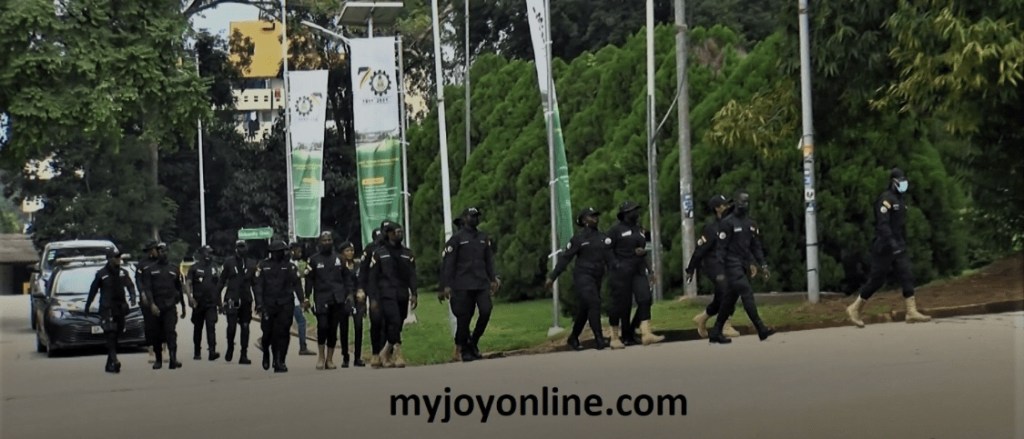
Two persons arrested in connection with the disturbances at the Kwame Nkrumah University of Science and Technology (KNUST) in Kumasi, have again, been remanded into police custody by the Asokore-Mampong District court.
The two, Daniel Osei Bonsu and Francis Atuahene, will reappear before the court presided by Mr. Samuel Quansah, on September 19, 2022.
The suspects, slapped with four charges of conspiracy to commit crime, rioting with offensive weapons, causing unlawful damage, and causing unlawful harm were first remanded into custody by the court on August 24, 2022. https://www.youtube.com/embed/-k6TKVH3YA0
Assistant Commissioner of Police (ACP) Mr. Kofi Blagodzi, Head of Legal and Prosecutions at the Ashanti Regional Police Command, told the court that the police needed more time to continue with investigations into the case.
He said the suspects could obstruct investigations if they were granted bail.
Lead counsel for the suspects, Mr. William Asamoah Sarpong, pleaded with the court to grant the suspects, one of them a student and the other a worker, bail since their continuous detention could affect them. https://www.youtube.com/embed/dvqgBoxFBEw
However, the court denied them bail and asked them to reappear on September 19, 2022, for the trial to continue.
The two suspects were among a group of students who clashed on the university campus during the hall week celebration of the University Hall.
The confrontation led to the destruction of many properties, including vehicles at the Unity Hall of residence of the KNUST, and injuries to some of the students.
Findings from an upcoming report from the Ghana Statistical Service (GSS) reveals that 7.9 million persons aged six years and older in Ghana are illiterates.
This, it said, meant that they could not read and write with understanding.
This was contained in a statement issued by GSS as it shares census statistics on illiteracy as part of the commemoration of World Literacy Day.
The statement said 4.6 million of the illiterates were females and 3.3 million males, indicating a female disadvantage that has been persistent over time.
The report also finds that between the 2010 and 2021 Population and Housing Censuses (PHC), 1.2 million more illiterate adults, 15 years and older were added to the population, from 4.3 million in 2010 to 5.5 million in 2021.
It said Ghana had lower levels of adult literacy compared to lower middle income and sub-Saharan African countries after three years of the provisions on illiteracy captured in the Education Strategic Plan (ESP) 2018-2030.
“This has necessitated the production of the 2021 PHC Thematic Report Brief on illiteracy in Ghana which will be released later this month. The report provides direction for stakeholders to target hotspots and drivers of illiteracy in Ghana as it focuses on three broad areas; trends, patterns and correlates of illiteracy,” the statement said.
It said an earlier report, the 2021 PHC General Report on Literacy and Education which presented data on literacy in English and local languages, current school attendance, and educational attainment disaggregated by sex, region and type of locality, was available to download from http://www.census2021.statsghana.gov.gh
The GSS provides comprehensive, reliable, quality, relevant, accurate and timely statistical information to guide national development as stipulated in Section 3 of the Statistical Service Act, 2019 (Act 1003).
Its vision is to be a trusted provider of statistical services for good governance and its mission, to lead the efficient production and management of quality official statistics based on international standards, using competent staff for evidence-based decision- making, in support of national development.
GSS also produces monthly and quarterly data on important economic indicators such as inflation, Consumer Price Index (CP), Producer Price Index (PPI), Gross Domestic Product (GDP) as well as population, housing, demographic and economic data at the locality, district, and national levels from routine surveys and censuses.
The statistics generated by GSS can be utilised by a wide cross-section of users, including the public sector, businesses, academia, civil society organisations and development partners.
The New Range Rover will be exclusively premiered in Ghana on Thursday, September 8, 2022, at the Land Rover Showroom in Accra.
Range Rover is the original luxury SUV and has led by example for 50 years, combining serene comfort and composure with all-conquering capability. The New Range Rover is the most desirable yet, effortlessly combining breathtaking modernity and aesthetic grace with technological sophistication and seamless connectivity – with space for up to seven adults for the first time.
The fifth-generation luxury SUV takes Land Rover’s modernist design philosophy to the next level with a contemporary interpretation of its trademark profile to create an incredible design statement.
“We are thrilled to unveil the new Range Rover in Ghana as a first opportunity for our clients and luxury enthusiasts to experience the vehicle’s peerless character, from the impeccable restraint of its exterior to the flawless tranquil sanctuary of its cabin. Informed by creative intellect and a desire for perfection, it doesn’t follow fashion or trend, but a modernist design philosophy, combined with over 50 years of evolution, it is quite simply the most desirable Range Rover ever created,” shares Fawaz Baitie, Land Rover Ghana, General Sales Manager.
The New Range Rover is defined by three lines that can trace their origins back through the generations; the falling roofline, strong waistline and rising sill line. These trademark features combine with a characteristically short front overhang and a distinctive new boat tail rear complete with practical split tailgate to create an elegant profile that conveys Range Rover’s peerless presence.
Flush elements and tight tolerances are a hallmark of the New Range Rover and design-enabling technologies contribute to its sophisticated honed-from-solid appearance, include flush glazing, a hidden waist rail finisher and seamless laser-welded roof joints. The distinctive hidden-until-lit rear lights are also critical to the success of the design and will become a Range Rover signature.
Sustainability extends beyond the choice of efficient powertrains, with innovative materials and processes combining to reduce the environmental impact of producing and driving the New Range Rover. These include a Kvadrat remix wool blend fabric that will be offered as a leather-free interior option. Its wool blend is warm and cossetting, making it the perfect cloth to accompany the technical Ultrafabrics material, which has all the tactile qualities of leather but is 30 percent lighter and generates only a quarter of the CO2.
“The New Range Rover is a superb manifestation of our vision to create the world’s most desirable luxury vehicles, for the most discerning of customers. It writes the next chapter in the unique story of pioneering innovation that has been a Range Rover hallmark for more than 50 years,” says Thierry Bolloré, Chief Executive Officer, Jaguar Land Rover.
The New Range Rover is the first model to use Land Rover’s new flexible Modular Longitudinal Architecture (MLA-Flex) which can accommodate internal combustion, plug-in hybrid and 100 percent electric powertrains. It represents the next step in Land Rover’s simplified architecture strategy as part of the move to deliver greater powertrain flexibility and set new quality benchmarks.
Comfort and well-being are enhanced by Cabin Air Purification Pro3, which combines dual-nanoeTM X technology for allergen reduction and pathogen removal to help significantly reduce odors, bacteria and viruses including SARS-CoV-2 viruses3, while CO2 Management and PM2.5 Cabin Air Filtration enhance air quality.
Customary Range Rover capability and composure is provided by Land Rover’s pioneering Integrated Chassis Control system, which controls the most comprehensive array of chassis technologies ever fitted to a vehicle of this kind.
All-Wheel Steering provides greater high-speed stability and the tightest turning circle of any Land Rover, while advanced Electronic Air Suspension preemptively reacts to the road ahead using eHorizon navigation data. New Dynamic Response Pro technology provides fast-reacting electronic roll control for elevated composure and agility in all environments.
The all-new fifth-generation Range Rover has been designed, developed and engineered in the UK and will be produced exclusively at Land Rover’s Solihull Manufacturing Facility, the historic home of Range Rover on a new state-of-the-art production line. The investment at the plant will drive enhanced quality, with assembly of efficient mild-hybrid, plug-in hybrid and pure-electric examples of the New Range Rover on the same line.
The New Range Rover is the most desirable ever made and will continue to be the must-have luxury SUV globally.
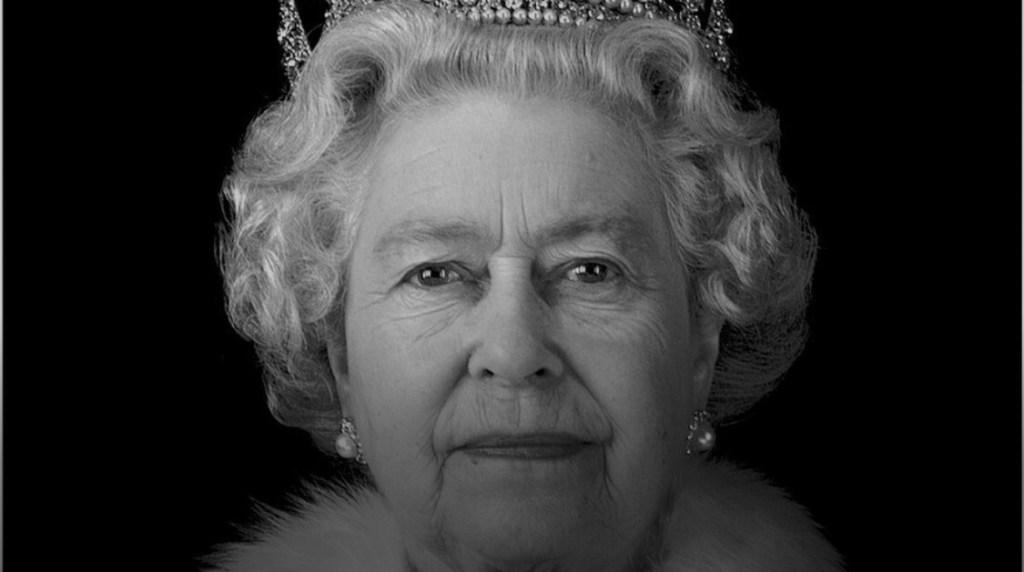
Queen Elizabeth II was the longest-reigning monarch in British history. She had four children, eight grandchildren and 12 great-grandchildren.
She died on 8 September after 70 years on the throne and is succeeded by her eldest son, Charles.
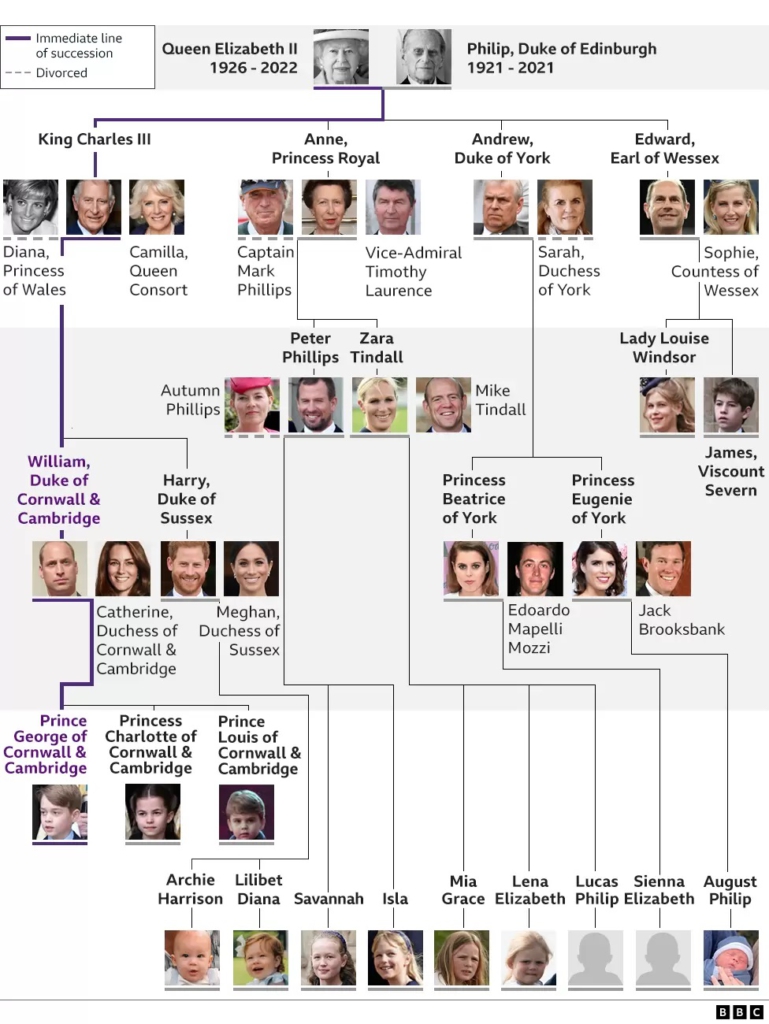
Find out more about the Royal Family and the line of succession below.
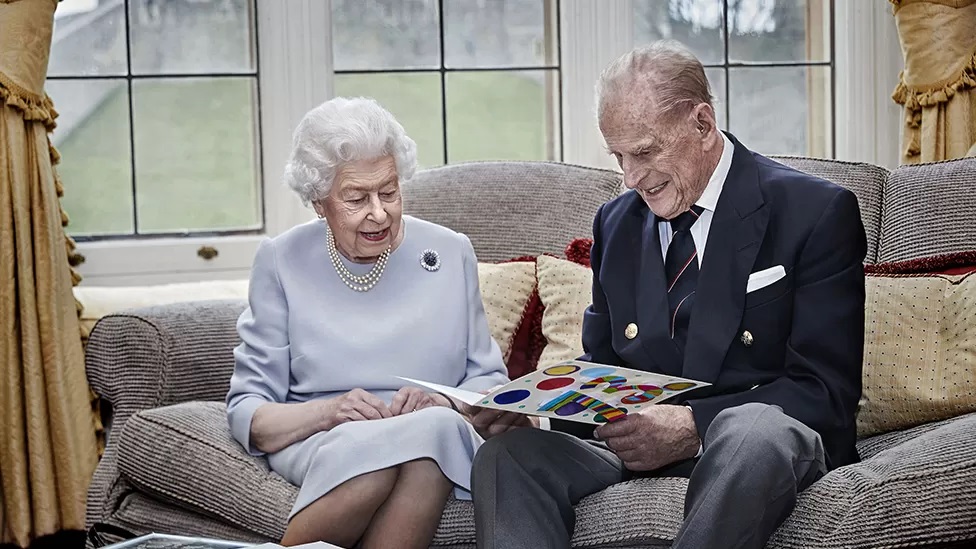
The Queen and Prince Philip, Duke of Edinburgh
The Queen was the UK’s longest-serving monarch, having reigned for 70 years. She was 96 when she died on 8 September 2022.
Born in 1926, Princess Elizabeth became queen on the death of her father, King George VI, in 1952. She married Philip, Duke of Edinburgh, in 1947 and the couple had four children: Charles, Anne, Andrew and Edward.
A former prince of Denmark and Greece, Prince Philip was born in 1921 and served in the Royal Navy in World War Two. He was the longest-serving consort of any British monarch and retired from royal duties in 2017 having completed more than 22,000 solo engagements.
He died on 9 April 2021.
Line of succession
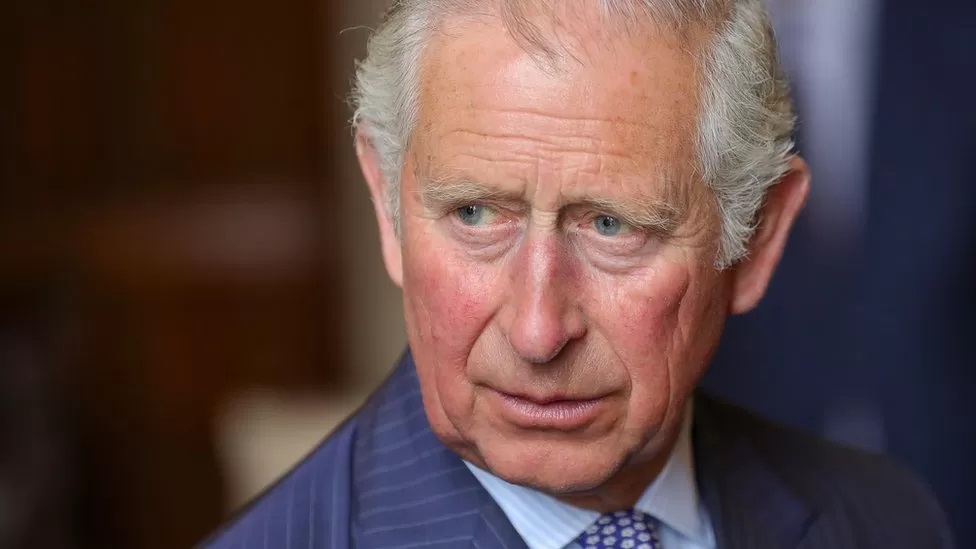
Charles has become the King
Born: 1948
The Queen’s eldest son has become King Charles III.
The now-former Prince of Wales married Lady Diana Spencer, who became the Princess of Wales, on 29 July 1981. The couple had two sons, William and Harry. They later separated and their marriage was dissolved in 1996. On 31 August 1997, the princess was killed in a car crash in Paris.
He married Camilla Parker Bowles on 9 April 2005.
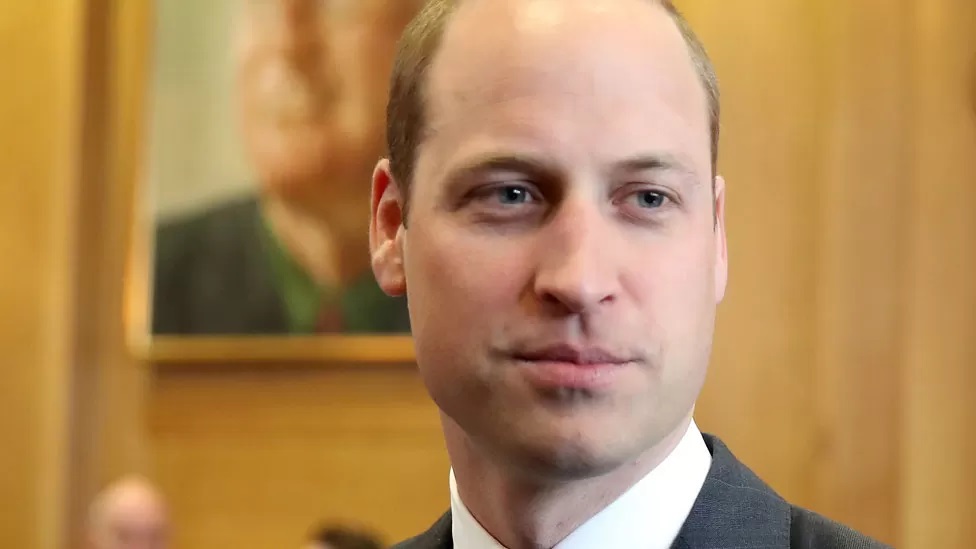
1. Prince William, Duke of Cornwall and Cambridge
Born: 1982
Prince William is the elder son of the now King Charles III and Diana, Princess of Wales, and is now first in line to the throne.
The duke was 15 when his mother died. He went on to study at St Andrews University, where he met his future wife, Kate Middleton. The couple were married in 2011.
On his 21st birthday, he was appointed a Counsellor of State – standing in for the Queen on official occasions. He and his wife had their first child, George, in July 2013, their second, Charlotte, in 2015 and third, Louis, in 2018.
The prince trained with the Army, Royal Navy and RAF before spending three years as an RAF search-and-rescue pilot with RAF Valley on Anglesey, north Wales. He also worked part-time for two years as a co-pilot with the East Anglian Air Ambulance alongside his royal duties. He left the role in July 2017 to take on more royal duties on behalf of the Queen and Duke of Edinburgh.
As heir to the throne, his main duties are to support the King in his royal commitments.
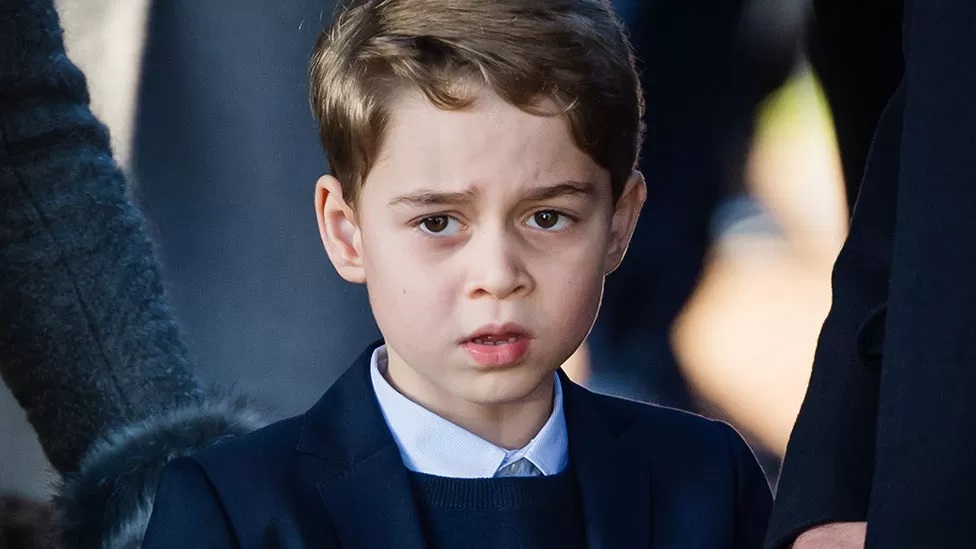
2. Prince George of Cornwall and Cambridge
Born: 2013
Prince George of Cornwall and Cambridge was born on 22 July 2013 at St Mary’s Hospital in London. Prince William was present for the birth of his son, who weighed 8lb 6oz (3.8kg).
Prince George is second in line to the throne, after his father.
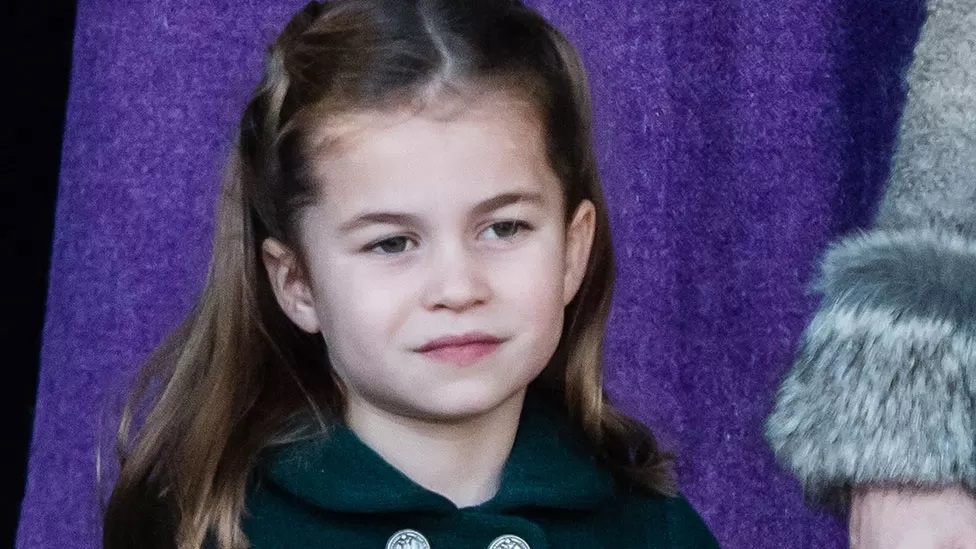
3. Princess Charlotte of Cornwall and Cambridge
Born: 2015
The Duchess of Cornwall and Cambridge gave birth to her second child, a girl, on 2 May 2015, again at St Mary’s Hospital. The duke was present for the birth of the 8lb 3oz (3.7kg) baby. The duke and duchess named her Charlotte Elizabeth Diana.
She is third in line to the throne, after her father and older brother, and is known as Her Royal Highness Princess Charlotte of Cornwall and Cambridge.
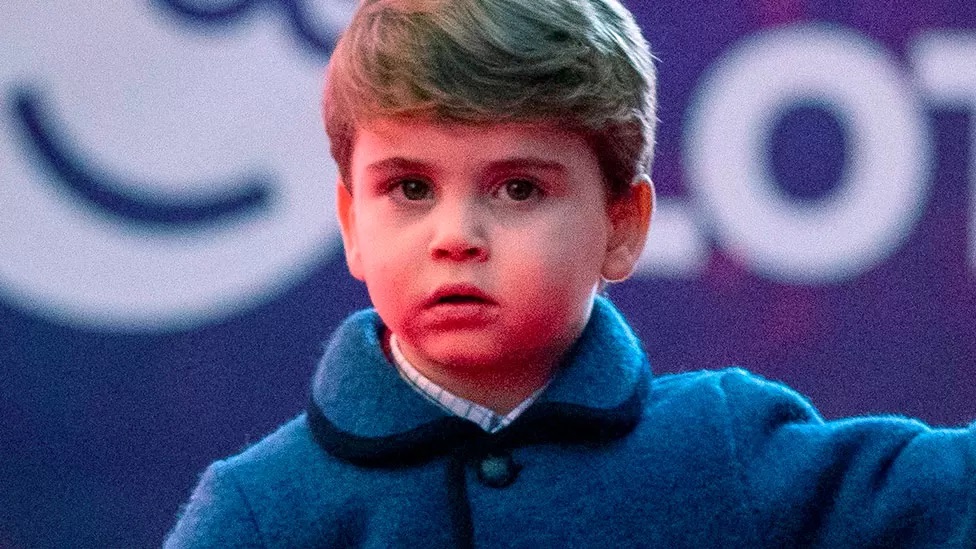
4. Prince Louis of Cornwall and Cambridge
Born: 2018
The Duchess of Cornwall and Cambridge gave birth to her third child, a boy weighing 8lbs 7oz, on 23 April 2018, at St Mary’s Hospital in London.
The duke was present for the birth of Louis Arthur Charles, who is fourth in line to the throne.
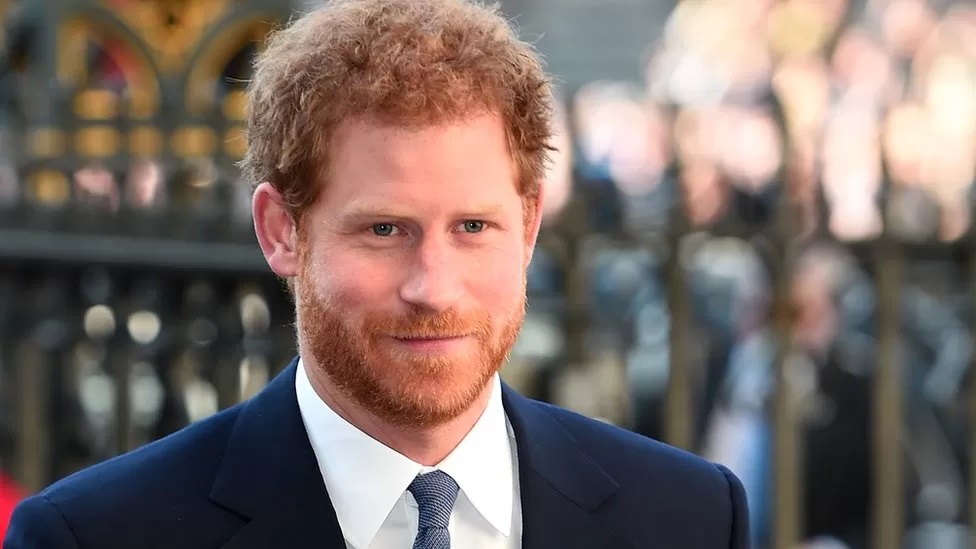
5. Prince Harry, Duke of Sussex
Born: 1984
Prince Harry trained at the Royal Military Academy Sandhurst and went on to become a lieutenant in the Army, serving as a helicopter pilot.
During his 10 years in the armed forces, Capt Wales, as he became known, saw active service in Afghanistan twice, in 2012 to 2013 as an Apache helicopter co-pilot and gunner. He left the Army in 2015 and now focuses on charitable work, including conservation in Africa and organising the Invictus Games for injured members of the armed forces.
He has been a Counsellor of State since his 21st birthday and stood in for the Queen on official duties.
He married US actress Meghan Markle on 19 May, 2018, at Windsor Castle. In January 2020, the royal couple said they would step back as “senior” royals and divide their time between the UK and North America. They said they intended to “work to become financially independent”.
Just over a year later, Buckingham Palace confirmed the couple would not be returning to royal duties, and would give up their honorary military appointments and royal patronages.
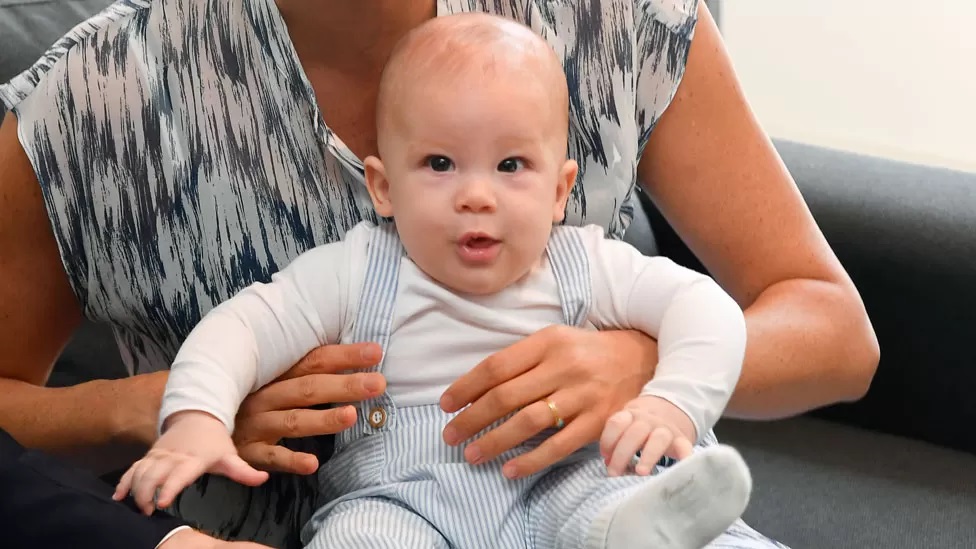
6. Archie Harrison Mountbatten-Windsor
Born: 2019
The Sussexes’ first child, Archie Harrison Mountbatten-Windsor, was born on 6 May 2019, weighing 7lbs 3oz, with the duke present for his birth. By naming him as they did, the couple chose not to use a title for their first born.
When the name was announced, BBC royal correspondent Jonny Dymond said the decision was a strong indication the couple did not want to bring him up as a formal royal.
7. Lilibet Diana Mountbatten-Windsor
Born: 2021
The Duchess of Sussex gave birth to her second child in Santa Barbara, California, on 4 June 2021. Lilibet Diana Mountbatten-Windsor – to be known as Lili – is named after the Royal Family’s nickname for the Queen and is her 11th great-grandchild.
She was given the middle name Diana in honour of Prince Harry’s mother, who died in a car crash in 1997 when he was 12 years old.
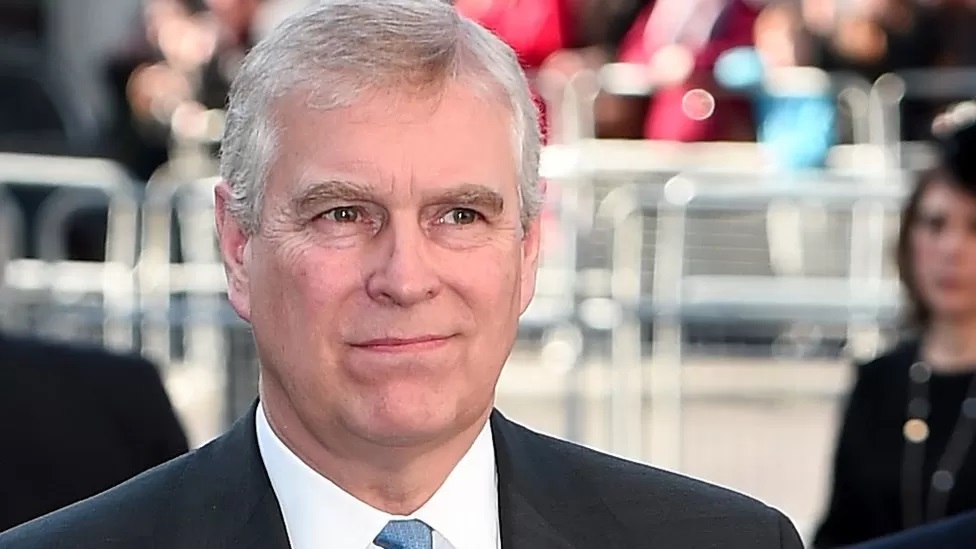
8. The Duke of York
Born: 1960
Prince Andrew, eighth in line to the throne, was the third child of the Queen and Duke of Edinburgh – but the first to be born to a reigning monarch for 103 years.
He was created the Duke of York on his marriage to Sarah Ferguson, who became Duchess of York, in 1986. They had two daughters – Beatrice, in 1988, and Eugenie, in 1990. In March 1992 it was announced the duke and duchess were to separate. They divorced in 1996.
The duke served for 22 years in the Royal Navy and saw active service in the Falklands War in 1982. In addition to royal engagements, he served as a special trade representative for the government until 2011.
Prince Andrew stepped away from royal duties in 2019 after an interview with the BBC about his relationship with US financier Jeffrey Epstein, who killed himself while awaiting trial on sex-trafficking and conspiracy charges.
Princess Beatrice is the elder daughter of Prince Andrew and Sarah, Duchess of York. Her full title is Her Royal Highness Princess Beatrice of York. She has no official surname, but uses the name York.
She married property tycoon Edoardo Mapelli Mozzi at The Royal Chapel of All Saints at Royal Lodge, Windsor, in July 2020. The couple had been due to marry in May, but coronavirus delayed the plans.
10. Sienna Elizabeth Mapelli Mozzi
Born: 2021
Princess Beatrice had a baby girl, Sienna Elizabeth, in September 2021, who is 10th in line to the throne and is the Queen’s 12th great-grandchild. Princess Beatrice is also stepmother to Mr Mapelli Mozzi’s son Christopher Woolf, known as Wolfie, from his previous relationship with Dara Huang.
11. Princess Eugenie
Born: 1990
Princess Eugenie is the younger daughter of Prince Andrew and Sarah, Duchess of York. Her full title is Her Royal Highness Princess Eugenie of York and she is 11th in line to the throne.
Like her sister Princess Beatrice, she has no official surname, but uses York. She married her long-term boyfriend Jack Brooksbank at Windsor Castle on 12 October 2018.
12. August Philip Hawke Brooksbank
Born: 2021
Princess Eugenie and Jack Brooksbank’s son, August, born on 9 February 2021, is the Queen’s ninth great-grandchild.
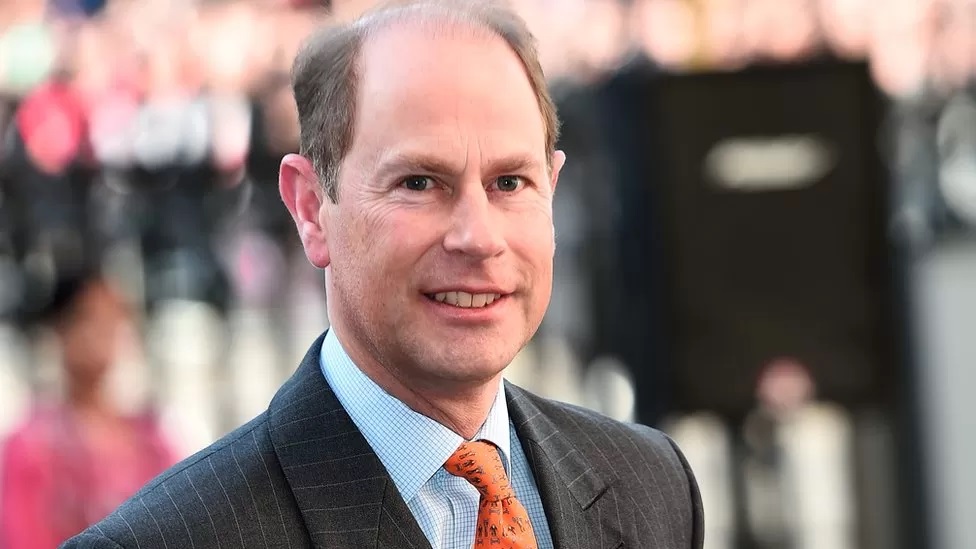
13. The Earl of Wessex
Born: 1964
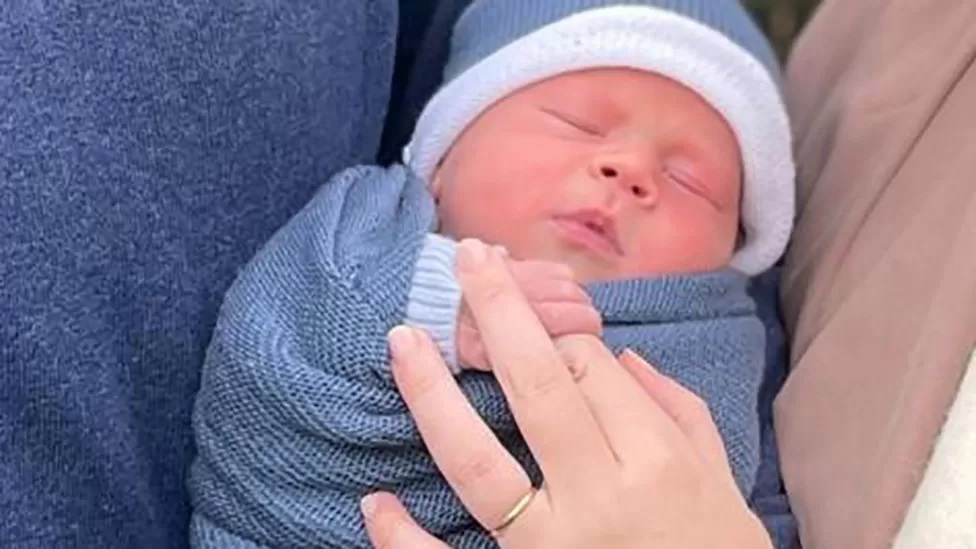
Prince Edward was given the title Earl of Wessex and Viscount Severn on his marriage to Sophie Rhys-Jones in 1999. The couple have two children, Lady Louise, born in 2003, and James, Viscount Severn, born in 2007.
After a brief period with the Royal Marines, the prince formed his own TV production company. He now supports the Queen in her official duties and carries out public engagements for charities. He is 13th in line to the throne.
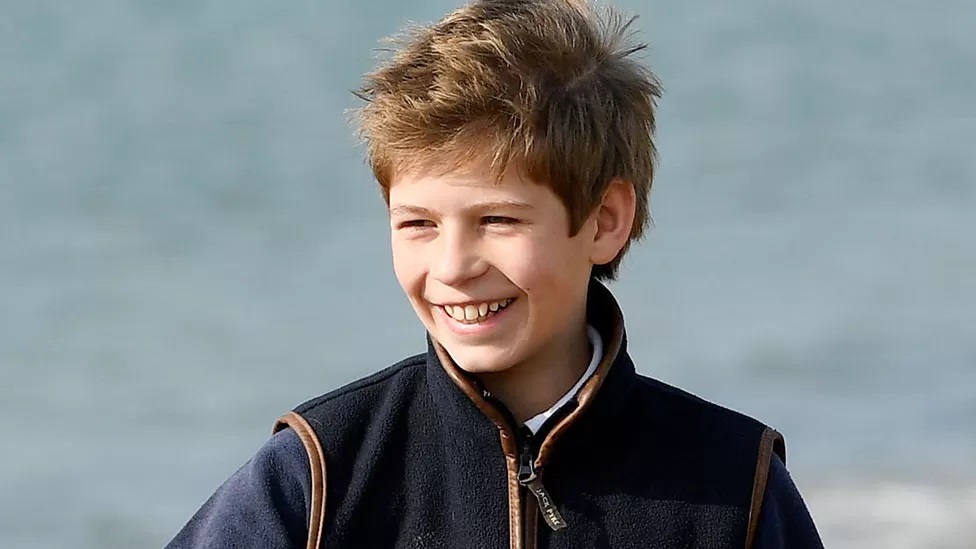
14. James, Viscount Severn
Born: 2007
Viscount Severn is the younger child of the Earl and Countess of Wessex. The couple decided to give their children “courtesy” titles as sons or daughters of an earl, rather than the style prince or princess. It is thought this decision was made to avoid some of the burdens of royal titles.
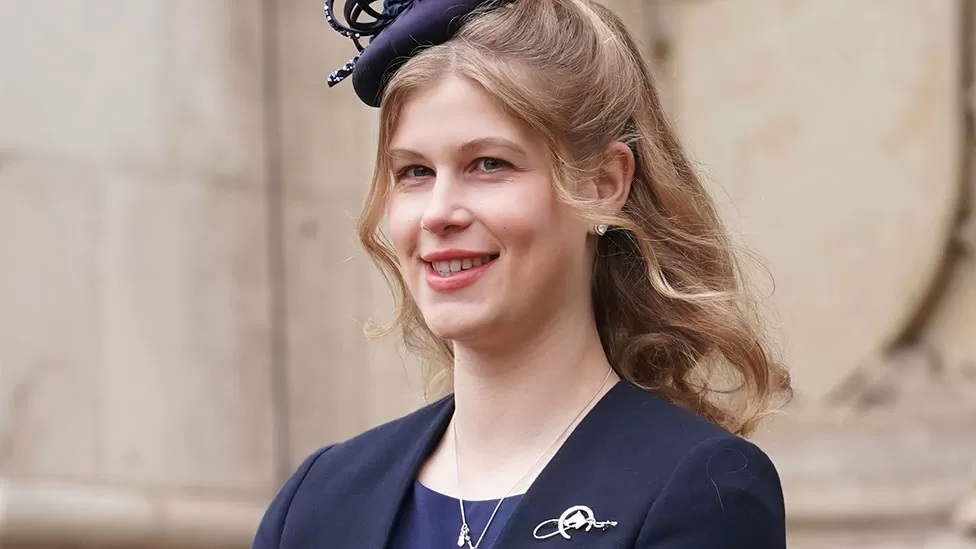
15. Lady Louise
Born: 2003
Born in 2003, Lady Louise Windsor is the elder child of the Earl and Countess of Wessex. However, she is lower in the line of succession than her younger brother because she was born before a law came into force scrapping the system that meant a younger son could displace an older daughter.
16. The Princess Royal
Born: 1950
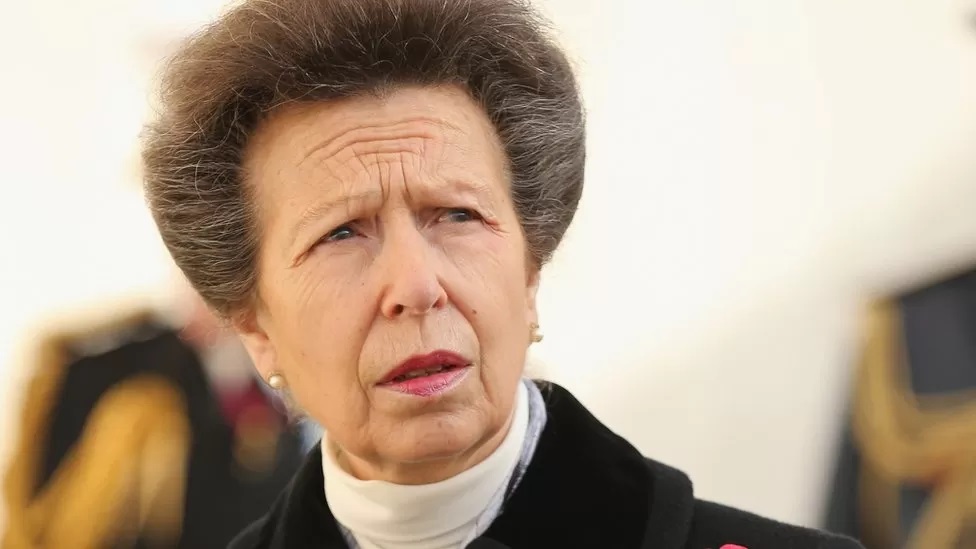
Anne, Princess Royal is the Queen’s second child and only daughter. When she was born she was third in line to the throne, but is now 16th. She was given the title Princess Royal in June 1987.
Princess Anne has married twice; her first husband Captain Mark Phillips is the father of her two children, Peter and Zara, while her second is Vice-Admiral Timothy Laurence.
The princess was the first royal to use the surname Mountbatten-Windsor in an official document, in the marriage register after her wedding to Capt Phillips. She competed in equestrian events for Great Britain in the 1976 Montreal Olympics and is involved with a number of charities, including Save the Children, of which she has been president since 1970.
17. Peter Phillips
Born: 1977
Peter Phillips is the eldest of the Queen’s grandchildren. He married Canadian Autumn Kelly in 2008 and together they have two daughters, Savannah, born in 2010, and Isla, born in 2012.
The children of Princess Royal do not have royal titles, as they are descended from the female line. Mark Phillips refused the offer of an earldom when he married so their children do not have courtesy titles.
Peter Phillips and his wife announced they were getting divorced in February 2020.
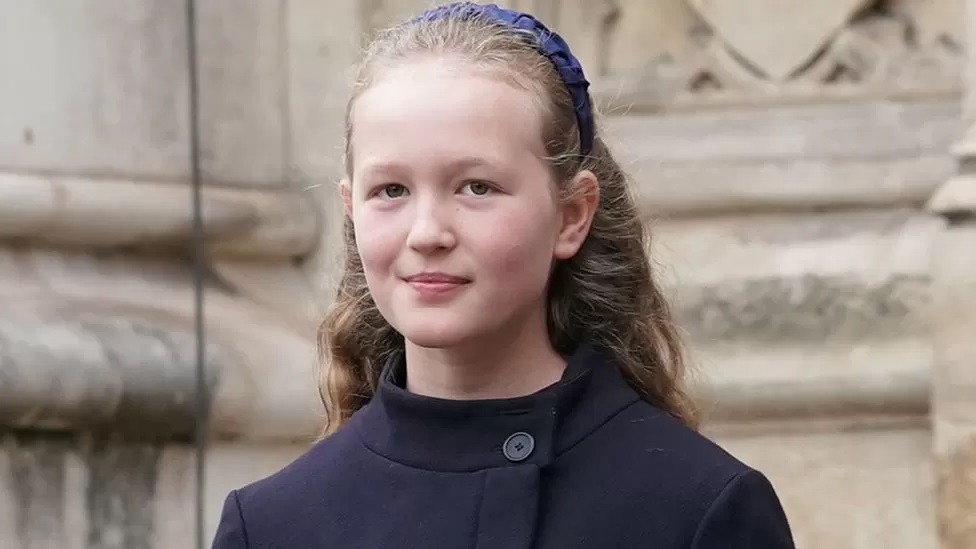
18. Savannah Phillips
Born: 2010
Savannah, born in 2010, is the elder daughter of Peter and Autumn Phillips and was the Queen’s first great-grandchild.
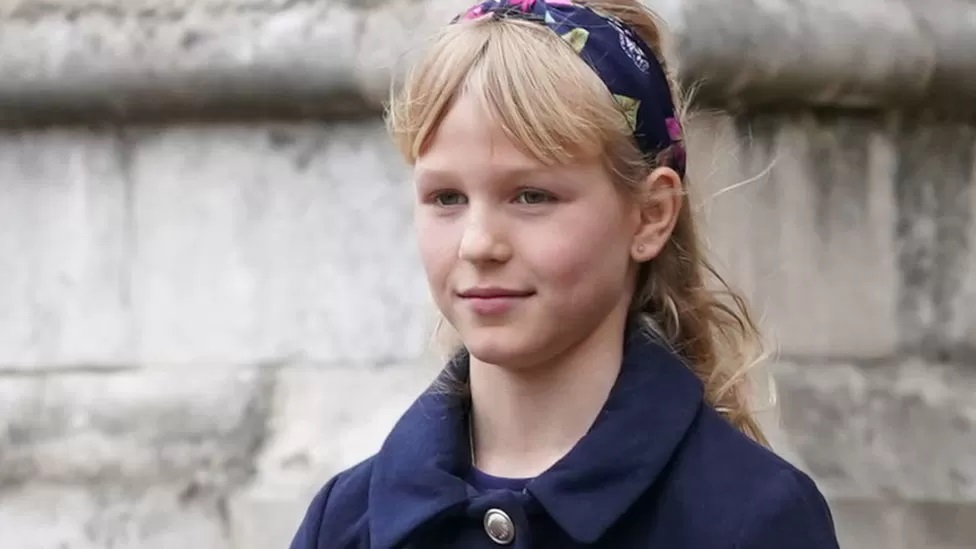
19. Isla Phillips
Born: 2012
Isla, born in 2012, is the second daughter of Peter and Autumn Phillips.
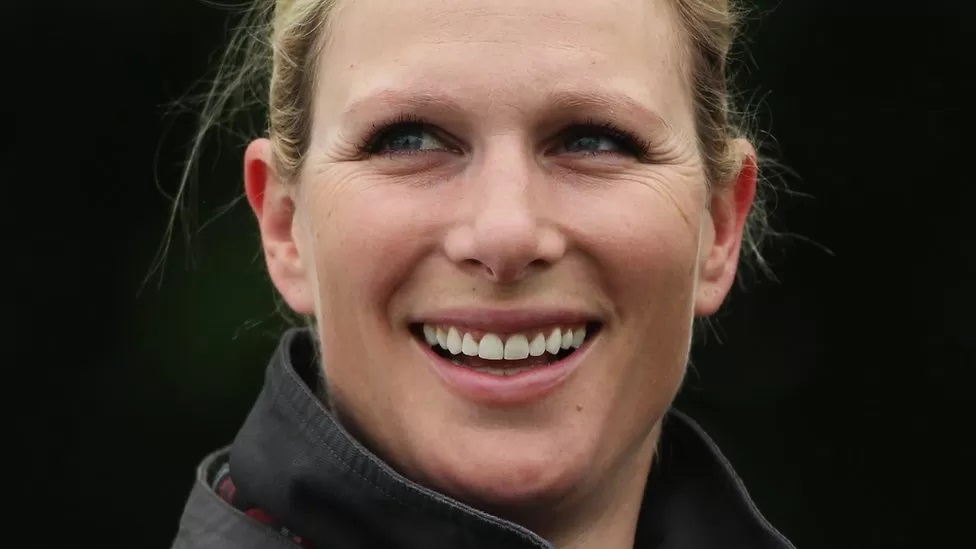
20. Zara Tindall
Born: 1981
Zara Tindall followed her mother and father with a highly successful riding career – including winning a silver medal at the London 2012 Olympics. She married former England rugby player Mike Tindall in 2011 and the couple had their first child, Mia Grace, in 2014.
The children of Princess Royal do not hold a royal title, as they are descended from the female line, but she remains 20th in line to the throne. Their father, Mark Phillips, turned down an earldom when he married Princess Anne, so they do not have courtesy titles.
21. Mia Grace Tindall
Born: 2014
The Queen’s granddaughter Zara Tindall gave birth to her first child, Mia Grace, in January 2014.
22. Lena Elizabeth Tindall
Born: 2018
The couple’s second child was born on 18 June 2018 at Stroud Maternity Unit, Gloucestershire, weighing 9lb 3oz.
Lena Elizabeth was named in honour of her great-grandmother.
Like her sister, Lena Elizabeth does not have a royal title and so will also be known as Miss Tindall.
23. Lucas Philip Tindall
Born: 2021
Zara and Mike Tindall’s son Lucas Philip, their third child – the Queen’s 10th great-grandchild – was born on 21 March 2021 weighing 8lbs 4oz
The Royal Family has announced the death of Queen Elizabeth II.
In a tweet on Thursday September 8, 2022, the Royal Family said “The Queen died peacefully at Balmoral this afternoon. The King and The Queen Consort will remain at Balmoral this evening and will return to London tomorrow.”
A few minutes after the announcement of her death, many Twitter users have begun commiserating with the Royal Family.https://platform.twitter.com/embed/Tweet.html?dnt=false&embedId=twitter-widget-0&features=e30%3D&frame=false&hideCard=false&hideThread=false&id=1567928275913121792&lang=en&origin=file%3A%2F%2F%2Fprivate%2Fvar%2Fcontainers%2FBundle%2FApplication%2F70DC1C4A-9BD0-46F3-8824-3AE8808A3BE5%2FMyJoyOnline.app%2F&theme=light&widgetsVersion=1bfeb5c3714e8%3A1661975971032&width=550pxhttps://platform.twitter.com/embed/Tweet.html?dnt=false&embedId=twitter-widget-1&features=e30%3D&frame=false&hideCard=false&hideThread=false&id=1567932740762468353&lang=en&origin=file%3A%2F%2F%2Fprivate%2Fvar%2Fcontainers%2FBundle%2FApplication%2F70DC1C4A-9BD0-46F3-8824-3AE8808A3BE5%2FMyJoyOnline.app%2F&theme=light&widgetsVersion=1bfeb5c3714e8%3A1661975971032&width=550pxhttps://platform.twitter.com/embed/Tweet.html?dnt=false&embedId=twitter-widget-2&features=e30%3D&frame=false&hideCard=false&hideThread=false&id=1567931182968639490&lang=en&origin=file%3A%2F%2F%2Fprivate%2Fvar%2Fcontainers%2FBundle%2FApplication%2F70DC1C4A-9BD0-46F3-8824-3AE8808A3BE5%2FMyJoyOnline.app%2F&theme=light&widgetsVersion=1bfeb5c3714e8%3A1661975971032&width=550pxhttps://platform.twitter.com/embed/Tweet.html?dnt=false&embedId=twitter-widget-3&features=e30%3D&frame=false&hideCard=false&hideThread=false&id=1567856196584968195&lang=en&origin=file%3A%2F%2F%2Fprivate%2Fvar%2Fcontainers%2FBundle%2FApplication%2F70DC1C4A-9BD0-46F3-8824-3AE8808A3BE5%2FMyJoyOnline.app%2F&theme=light&widgetsVersion=1bfeb5c3714e8%3A1661975971032&width=550pxhttps://platform.twitter.com/embed/Tweet.html?dnt=false&embedId=twitter-widget-4&features=e30%3D&frame=false&hideCard=false&hideThread=false&id=1567933939691540481&lang=en&origin=file%3A%2F%2F%2Fprivate%2Fvar%2Fcontainers%2FBundle%2FApplication%2F70DC1C4A-9BD0-46F3-8824-3AE8808A3BE5%2FMyJoyOnline.app%2F&theme=light&widgetsVersion=1bfeb5c3714e8%3A1661975971032&width=550px
Earlier today, Buckingham Palace reported that The Queen was under medical supervision at Balmoral after doctors became concerned for her health.
“Following further evaluation this morning, the Queen’s doctors are concerned for Her Majesty’s health and have recommended she remain under medical supervision,” they said in a statement.
China has become the first country to approve an inhaled Covid vaccine.
Made by CanSino, it has similar ingredients to its injected vaccine, using a harmless adenovirus as a carrier for the genetic code that teaches the body how to fight Covid.
Inhaled as a fine mist, Convidecia Air can provide good protection after just one breath, the company says.
Other researchers, including teams in the UK and the US, have been investigating nasal spray vaccines.
Scientists say these may give added immunity in the lining of the nose and upper airways, where Covid typically enters the body.
The National Medical Products Administration of China granted CanSino approval for its inhaled vaccine to be used as a booster dose.
It can top up protection in those who have previously had a jab, trials suggest.
Meanwhile, the latest Covid vaccine booster programme has begun in England, Wales and Scotland.
Infections are falling around the UK – but health bosses predict a resurgence of Covid and flu this autumn and winter.
They are urging those eligible to protect themselves from serious illness by being vaccinated against both.
An Islamic Court in the northern Nigerian state of Kano has ordered 10 singers popular on the TikTok social media platform to be investigated for allegedly corrupting public morality.
A spokesperson for the judiciary in Kano state, Baba Jibo Ibrahim, told the BBC the order to investigate the singers followed a complaint by a group of lawyers accusing them of using obscene language in their songs.
The authorities say if police investigations find sufficient evidence, the musicians would be prosecuted.
The singers – who are popular with young people in northern Nigeria, particularly on TikTok – have not yet commented publicly on the allegations.
Some of them are also actors in the booming Hausa-language movie industry known as Kannywood.
Kano is among around a dozen states in northern Nigeria where Sharia, or Islamic law, is practiced along with the country’s secular laws.
A number of artists have been jailed in the past in the region for promoting what the authorities called ‘’immorality’’.
WhatsApp will eventually stop supporting some outdated iOS versions. which effectively leaves out a number of iPhone models.
Frequently, some smartphone models are no longer supported by WhatsApp. This was especially true in November of last year.
WhatsApp was no longer compatible with devices running some KaiOS, Android, or iOS versions. And shortly after, while the iPhone 14 is ready for launch, the app will eventually only work with iOS 12 and later.
Certain iPhone models must inevitably be left out of this. Even while most users use modern smartphones, other users continue to use the older devices. We specifically consider users, who for a long period used an iPhone 5 but now have to upgrade.
“Unfortunately, for internal reasons, WhatsApp is now planning to drop support for some iOS versions over the next few months: we are talking about iOS 10 and iOS 11,” WABetaInfo reveals in a report. This reveals a screenshot with the following message: “Update to the latest version of iOS to continue using WhatsApp. The app will stop supporting this version of iOS after October 24, 2022.
Alternatively, the crucial day when some WhatsApp users will be absent. You will need to upgrade to iOS 12 if your iPhone is still using iOS 10 or iOS 11 in order to continue using WhatsApp. You can still use the app normally on your iPhone 5S, iPhone 6, or iPhone 6S by installing the system’s 12th version.
However, the iPhone 5 and iPhone 5C are incompatible with iOS 12. Thus, by the end of October, the latter will no longer be able to support the instant messaging app. Users who must use these outdated devices should give up WhatsApp.
The new iPhone 14 lineup will ship without physical SIM trays — but only in the US. They’ll be able to use two eSIMs at once (and store more than that), but is the lack of a physical tray a big deal? And is it user-hostile and stupid?
First, a refresher on eSIMs: they’re SIM cards, but electronic, not physical. That means your phone can be provisioned remotely — no more going to a store to get a physical SIM. This makes it easier (in some ways) to switch networks or try one out — T-Mobile now uses eSIMs to let people test-drive its network for up to three months.
As of iOS 16, you can even transfer your eSIM between iPhones via Bluetooth, which should make it almost as easy as a physical SIM — as long as you’re staying in the Apple ecosystem. Of course.
Most major US carriers, and many worldwide, have eSIM support, and iPhones have supported them since 2018, including the ability to use two SIMs at once. Up until the iPhone 13, that meant one eSIM and one physical SIM; the iPhone 13 family introduced the ability to use two eSIMs at the same time. Removing the physical SIM — and the hole in the case it requires — is the next logical step. At least for Apple, and at least in the US — the iPhone 14 still has a SIM tray everywhere else.
If you’re on a major US cell phone network — AT&T, Verizon, or T-Mobile — the lack of a physical SIM tray probably won’t impact you much. Even if you change carriers or change phones, you can download an eSIM directly from Verizon, AT&T, or T-Mobile without going to a store.
But if you are on a carrier that doesn’t have eSIM support or you’re planning to switch to one, well, you shouldn’t get the iPhone 14 right now. You might not have to wait too long; this could be the push smaller carriers need to get on board with eSIMs.
(Outside the US, the iPhone 14 lineup still includes nano-SIM slots.)
That’s no SIM slot; it’s a mmWave cutout
At the launch event, Apple spokespeople told The Verge that the iPhone 14 can store up to six eSIMS, with up to two active at once; the iPhone 14 Pro can hold eight. Global eSIM reseller Airolo says previous iPhones could hold five to 10, depending on the model. This could take some of the sting out of the loss of the physical SIM tray, though not all international carriers support eSIMs. (I haven’t used Airolo and can’t vouch for them, but being able to remotely provision a local eSIM when traveling abroad could remove the hassle of finding a local SIM.)
The ability to have more than one active SIM is great for frequent travelers, people who live in areas where any one network has spotty coverage, or folks who have separate work and personal numbers. I bought my iPhone 11 when I lived in the Netherlands, and it has both a Dutch eSIM and a physical Verizon SIM. That meant I could use a local SIM whether I was in Europe or the US without losing access to my other number or having to mess with my iMessage or WhatsApp settings.
Physical SIMs make it easy to bring your phone to a different carrier or bring your number to a new phone. They’re ubiquitous, work on all phones, and are easy enough to use (though also easy to lose; ask me how I know). Many of my co-workers are not psyched about losing the SIM slot. Moving an eSIM from an iPhone to an Android phone isn’t necessarily trivial.
I don’t think removing the SIM tray is necessarily user-hostile for most people; most people just do not switch carriers or phones every few weeks. But that depends on how easy providers make it to install and migrate eSIMs across platforms. We’ll see how this plays out.
Update Sept 7th, 4:45PM ET: Added information on eSIM support: the iPhone 14 can store up to six and the 14 Pro can store up to eight. Models sold outside the US still support physical nano-SIMs.
























 Congo.dev